Zum Inhalt springen

If you work in solar cell manufacturing and have not yet optimized your platform paper specification, you are likely losing yield without knowing the exact cause. Photovoltaic platform paper is a specialty industrial paper used on the conveyor and platform surfaces of solar cell production equipment — and the wrong paper is a direct source of microcrack defects, cell contamination, and EL inspection failures that reduce your production output.
This guide covers what photovoltaic platform paper is, where it is used in the production line, the critical specifications that affect cell yield, and how to choose the right grade for your equipment.
What Is Photovoltaic Platform Paper?
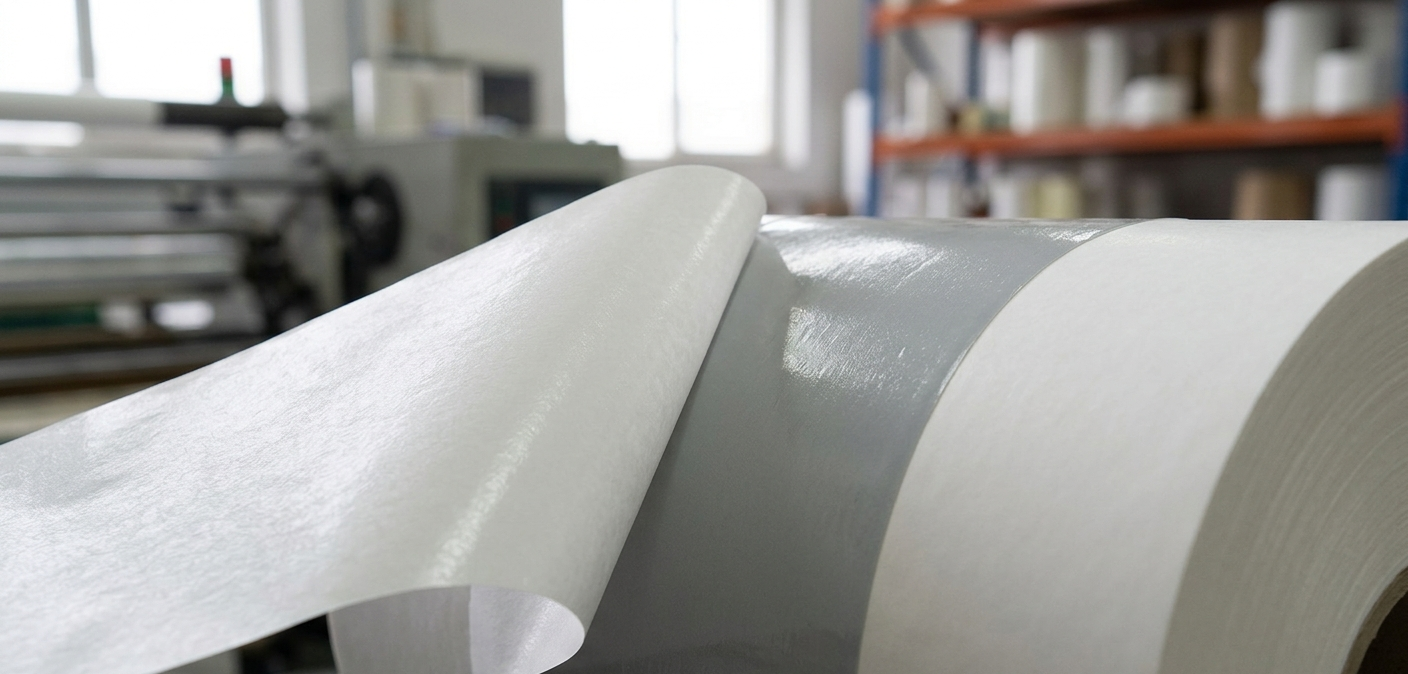
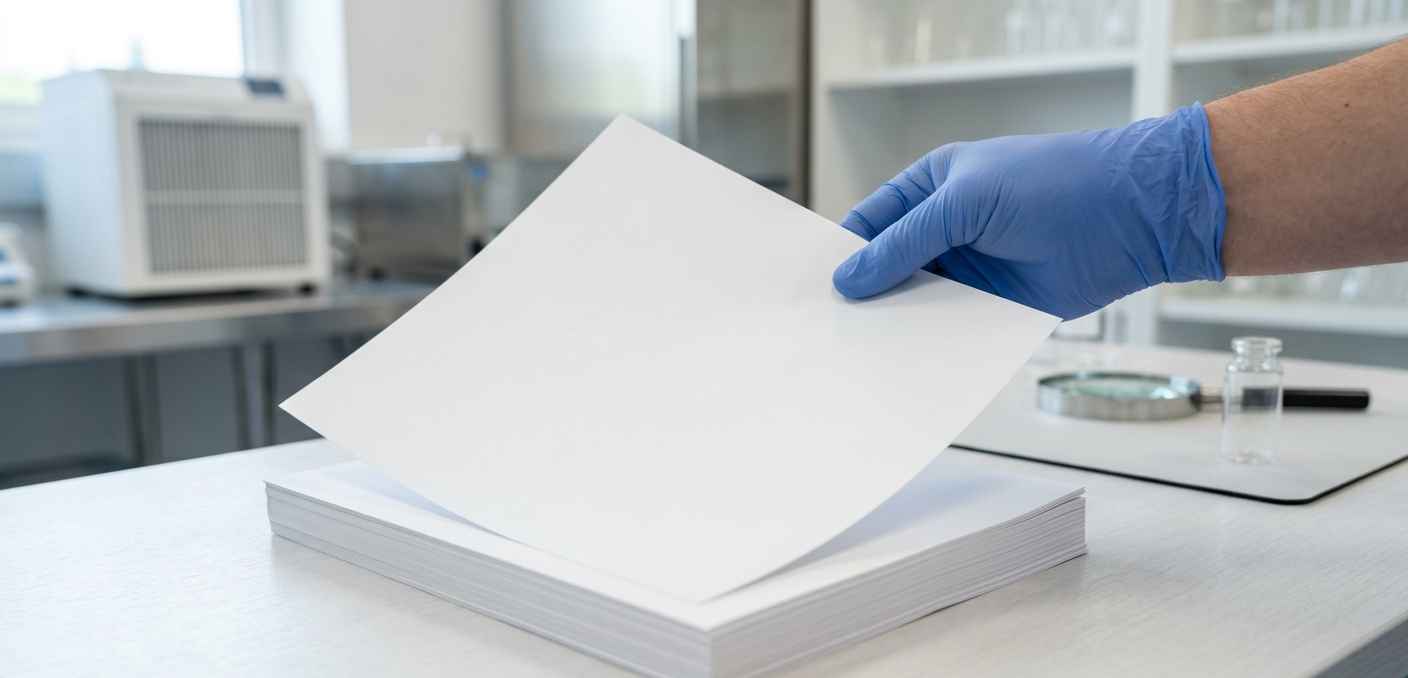
Photovoltaic platform paper (also called solar cell pad paper, PV pad paper, or solar cell platform paper) is a specialty paper placed on the handling surfaces, conveyor belts, and staging platforms of solar cell production equipment. Its function is to provide a clean, smooth, anti-static, and non-abrasive interface between the production equipment surface and fragile silicon solar cells as they move through the production line.
Unlike standard industrial paper, photovoltaic platform paper must meet several simultaneous requirements that generic paper cannot satisfy: smooth enough not to scratch cell passivation layers, anti-static to prevent electrostatic charge accumulation on silicon surfaces, acid-free to avoid chemical interaction with cell surface coatings, and clean enough (low particle generation) to maintain the near-cleanroom environment required in modern high-efficiency cell production.
Where Is Platform Paper Used in the Solar Cell Production Line?
Platform paper is a consumable material used at multiple stages of the solar cell manufacturing process. Here are the primary application points:
Cell Input Magazines and Trays (Stringer/Tabber Input)
Before cells enter the stringer or tabbing machine, they are stored in input magazines or trays. Platform paper lines these storage areas to prevent cell-to-cell contact and to provide a clean surface between the tray and the cell’s sensitive back-side electrode. Anti-static paper here prevents cells from clinging together during automated de-stacking.
Conveyor Surfaces in Tabbing and Interconnect Machines
As cells move through the tabbing machine on conveyor belts, the contact between the belt surface and the cell’s front metallization must be free of abrasion. Platform paper placed on the conveyor provides a replaceable clean surface — when the paper becomes contaminated (flux residue, cell fragments), it is replaced rather than cleaning the expensive conveyor belt.
EL Inspection Conveyor
Electroluminescence (EL) inspection is performed in the dark, and the conveyor surface in the dark box must not interfere with the cell’s electrical performance during measurement. Anti-static platform paper prevents static charge accumulation that could cause cell misalignment or anomalous current distribution during EL imaging.
Cell Sorter and IV Tester Platforms
Cell sorters and IV testers measure each cell’s electrical output and sort by power class. The test platform must provide consistent, non-conductive cell contact. Platform paper provides this consistent interface, and its replacement at set intervals (typically every 500–1,000 cells or shift change) maintains consistent contact resistance measurements.
Module Assembly Staging Tables
In module assembly, cells are staged on tables before string assembly. Platform paper on these tables provides an anti-static, non-abrasive staging surface that prevents cell surface scratches during manual handling.
Why the Wrong Platform Paper Costs You Yield
The yield impact of incorrect platform paper is real and measurable, though it is often attributed to equipment problems or cell quality issues rather than the paper material. Here are the three principal failure mechanisms:
Microcrack Initiation from Surface Roughness
Standard paper — including many grades sold as ‘cleanroom paper’ or ‘office copy paper’ — has surface fiber protrusions that create point contacts with cell surfaces. Silicon solar cells (160–180μm thick) are extremely brittle, and point-contact stress concentrations under even light handling pressure can initiate microcracks at the cell surface.
These microcracks are invisible under standard visual inspection but appear as dark lines in EL images. In production, microcrack-related EL failures that cannot be attributed to a specific handling event are often caused by surface contact with incorrect platform paper over many cell contacts throughout the shift.
Particle Contamination of Cell Metallization
Paper fibers shed from the paper surface deposit on cell front contacts and back-side electrodes. Fiber particles trapped under contact fingers during subsequent processing steps create current blockage in the contact area — reducing fill factor and efficiency for affected cells. High-efficiency PERC and TOPCon cells with finer contact finger geometries are more sensitive to particle contamination than standard BSFL cells.
Electrostatic Attraction of Airborne Particles
Silicon cells generate triboelectric charge during high-speed automated conveyance. This static charge, if not dissipated, attracts airborne particles (paper dust, clean room airborne particulates) to the cell surface during conveyance. Non-antistatic platform paper does not dissipate this charge — it may actually amplify it through the friction between cell and paper surface.
Photovoltaic Platform Paper Specifications — What to Look For
| SPECIFICATION | REQUIREMENT FOR PV APPLICATION |
| Surface roughness | Smooth — Sheffield <120 or Bekk >100 sec. No visible fiber protrusions. |
| Antistatic treatment | Surface resistance 10e7-10e10 Ohm/sq (dissipative range). Effective at 30-60% RH. |
| pH value | 7.0-8.5 — acid-free. No acidic gas contribution to cell surfaces. |
| Particle generation | Low — visible fiber particle count <50/dm2 under 500 lux illumination. |
| Paper weight (gsm) | 60-100gsm for conveyor/platform lining. 50-80gsm for cell magazine interleaving. |
| Thermal stability | Stable to 120 degrees C — compatible with pre-heating stages in stringer and tabber. |
| Caliper uniformity | +-5% of specified gsm across sheet area — uniform cell contact pressure. |
How Often Should Platform Paper Be Replaced?
Replacement interval depends on line speed, cell format, and facility cleanliness level. As practical guidelines:
- High-speed automated lines (above 2,000 cells/hour): Replace platform paper at the start of each shift (8–12 hours). At this speed, surface contamination accumulates rapidly from cell fragment dust, flux overspray, and handling contact.
- Medium-speed lines (500–2,000 cells/hour): Replace every 1–2 days, or sooner if visible surface contamination is observed.
- Manual staging tables and slow-speed equipment: Replace weekly or when visible surface degradation is observed.
The economics support frequent replacement: platform paper costs $0.05–0.20 per sheet at production volumes. A single EL-rejected cell is worth $0.30–0.80. The breakeven between replacement cost and yield protection is reached after preventing 1–3 defective cells per sheet — achievable in the first hour of a high-speed line.
| Kangchuang Paper supplies photovoltaic platform paper to PV production lines in China and for export. Anti-static (10⁷–10¹⁰ Ω/sq), acid-free, smooth-surface — custom cut to your equipment dimensions. Free samples via DHL Express. → kangchuangpapers.com/product/photovoltaic-platform-paper-pad-paper/ |
Frequently Asked Questions
Is photovoltaic platform paper the same as ESD paper?
ESD paper and photovoltaic platform paper share the antistatic specification (surface resistance 10⁷–10¹⁰ Ω/sq) but PV platform paper has additional requirements: smooth surface for non-abrasive silicon cell contact, low particle generation for clean room compatibility, acid-free chemistry for cell surface passivation protection, and thermal stability for heated conveyor areas. Standard ESD paper may not meet all these PV-specific requirements.
Can I use A4 copy paper as a substitute for platform paper to save cost?
No. A4 copy paper is not antistatic, has variable surface smoothness that may scratch cell passivation layers, and generates paper dust particles. The apparent cost saving is eliminated after a single shift of microcrack-induced EL rejects. Correct platform paper specification is a yield cost, not a materials cost.
What cell format dimensions do you cut platform paper to?
We cut to M2 (156×156mm), M6 (166×166mm), M10 (182×182mm), G12 (210×210mm), and any custom cell or conveyor dimension. Specify your equipment platform dimensions and we produce to that exact size.
Does platform paper work for HJT (heterojunction) cell production?
Yes — HJT cells use thinner silicon wafers (100–130μm) than standard PERC cells, making them more sensitive to surface contact stress. The smooth surface and caliper uniformity specifications of our platform paper are particularly important for HJT applications. Specify 60–80gsm for HJT cell handling.