Zum Inhalt springen

Kraft paper is the default void-fill, wrapping, and cushioning material for online orders strong, recyclable, printable, cheap by the roll. For most shipments a 70–90 GSM natural kraft handles wrapping and void fill; step up to 100–120 GSM for fragile or heavy items. Rule of thumb: match the weight to the product, not the product to the paper.
Every growing e-commerce brand hits the same wall. Orders are climbing, the packing bench is a graveyard of half-used materials, and somebody finally asks the question nobody scheduled a meeting for: what are we actually supposed to wrap this stuff in? Plastic looks cheap and photographs worse. Bubble wrap costs a fortune and customers resent binning it. Kraft paper keeps showing up in the answer. There’s a reason.
I’ve helped enough sellers rebuild their packing tables to know the appeal runs past “it’s eco-friendly.” Kraft is just practical. It protects the product. It unboxes like you meant it. It takes a printed logo. And it drops into the recycling with zero guilt. But “Kraftpapier” covers a big spread of weights and finishes, and buying the wrong grade burns money in both directions — too flimsy and it fails, too heavy and you overpay on every single order. Let’s nail the spec.
Why Kraft Paper Wins for Online Orders
Three forces put kraft at the center of most fulfillment operations.
First, cost per shipment. Bought by the roll, it’s one of the cheapest ways going to fill void space and wrap goods. Second, the unboxing moment a clean sheet, maybe a printed logo, reads as premium and deliberate in a way a wad of loose plastic never manages. Third, sustainability: kraft goes curbside almost everywhere and increasingly ships with recycled content, which matters now that customers read the packaging before they even reach the product.
There’s a quieter fourth reason, too. It’s forgiving. One material wraps a mug, cradles a candle, plugs the gap around a hardcover, and crumples into a nest for something breakable. Fewer SKUs on the bench means fewer wrong-material mistakes and faster packing. That adds up over a shift.
Matching Kraft Weight to the Job
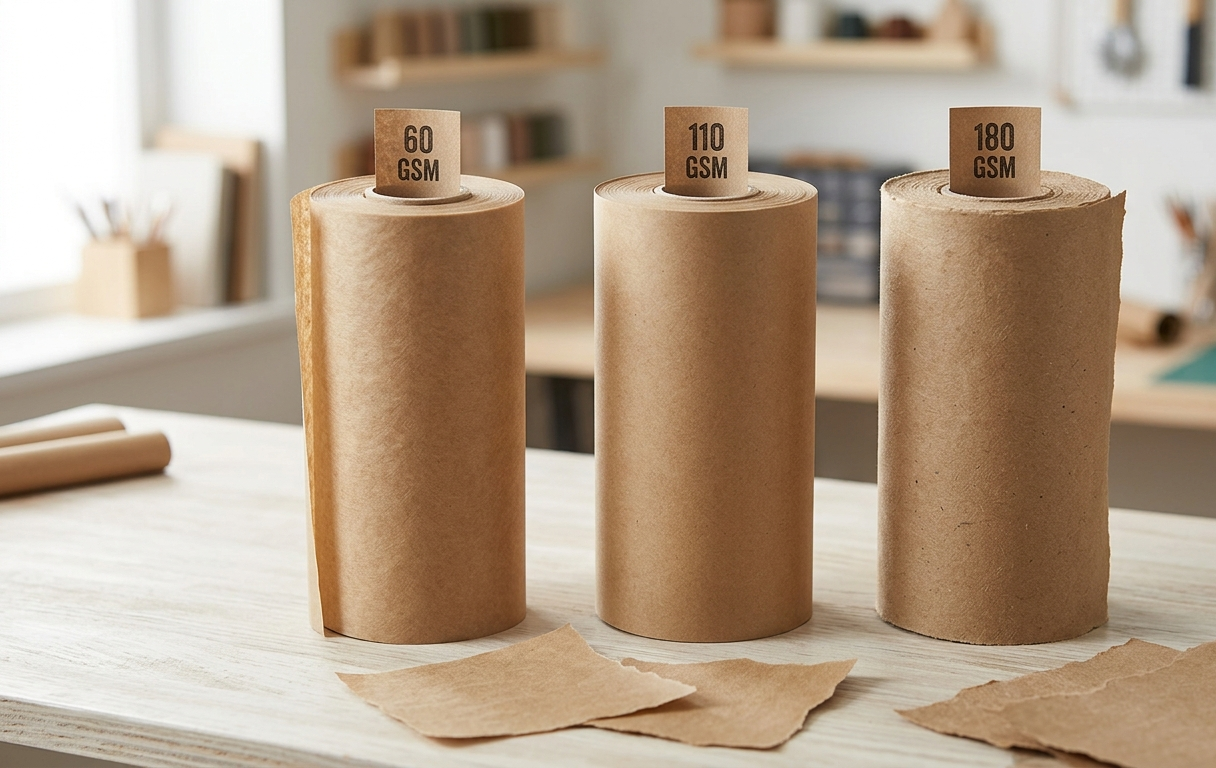
Here’s where buyers over- and under-spend, sometimes in the same week. Basis weight — GSM, grams per square meter — sets strength, feel, and cost. Too light, it splits at the fold. Too heavy, you’re paying for stiffness the order never needed. If GSM is unfamiliar ground, our kraft paper weight guide for GSM packaging is the deeper reference. This table covers the everyday calls.
| Use case | Suggested GSM | Warum |
| Void fill / crumpled cushioning | 50–70 | Crumples easily, cheap by volume |
| General product wrapping | 70–90 | Strong enough to fold, still economical |
| Fragile / heavier items | 100–120 | Resists punctures and tearing |
| Premium branded wrap | 90–120 + print | Feels substantial, prints cleanly |
The mistake I see most? Buying one heavy grade for everything “to be safe.” Now you’re wrapping featherweight apparel in paper stiff enough to box a ceramic vase — and eating that cost on every order that goes out the door. We dug into that exact trade-off in kraft paper weight for e-commerce shipping.
Brown vs. White Kraft: Which Looks Right?
Color isn’t just looks. It’s a signal. Natural brown kraft reads rustic, honest, eco-conscious — and it’s the cheaper of the two. Bleached white reads clean, modern, premium, and it makes a printed logo genuinely pop. Neither is stronger at the same weight, so this one’s about the story your unboxing tells, not the physics. On the fence? We laid it all out in brown kraft vs. white kraft paper.
Virgin vs. Recycled Kraft
Sustainability-minded buyers always ask the same thing: is recycled kraft “as good”? For the vast majority of e-commerce wrapping and void fill yes. It performs fine and it tells a stronger environmental story. Virgin kraft has slightly longer, tougher fibers, which earns its keep when you need maximum tear resistance for heavy or sharp items. The full nuance lives in virgin kraft vs. recycled kraft paper. For the average order, recycled is the smart default and I’d start there.
Formats: Rolls, Sheets, or Bubble-Alternative?
Kraft doesn’t come in just one shape, and the format quietly sets how fast your team packs.
| Format | Am besten geeignet für | Note |
| Roll (plain) | Wrapping, void fill at scale | Cheapest per meter; needs a dispenser |
| Pre-cut sheets | Consistent wrapping, low volume | Faster for small operations |
| Honeycomb / expandable kraft | Cushioning fragile goods | Replaces bubble wrap, fully recyclable |
| Printed roll | Branded unboxing | Order lead time for custom print |
A wall-mounted roll dispenser at each station is, honestly, the best cheap productivity upgrade a growing shop can make. It turns wrapping into a two-second motion and stops the over-pulling that quietly wastes paper all day long.
Getting the Most Out of Kraft (Field Tips)
Crumple, don’t just layer. Crumpled kraft traps air and cushions far better than flat sheets at the same weight — it’s not close. Wrap fragile items in a loose nest, not a tight skin, so the paper has room to absorb a knock. Keep one mid-weight grade as your everyday roll and reserve a heavier grade only for the SKUs that genuinely break, instead of over-speccing across the whole catalog. And if you print, keep it simple and high-contrast. Kraft’s texture eats fine detail for breakfast.
Want the wider view? Our roundup of eco-friendly paper packaging alternatives puts kraft in context against the rest, and if you’re sourcing at real volume we work with online sellers directly as kraft paper suppliers for e-commerce.
The Sustainability Angle Customers Actually Notice
Worth sitting with for a second: your packaging is now part of your product review. Shoppers film their unboxings. Plastic void fill shows up as a black mark in a way it simply didn’t five years ago. Switching to recyclable kraft is one of those rare moves that lowers cost, sharpens the unboxing, and buys goodwill all at once. That combination almost never happens in fulfillment — which is why kraft has gone from a nice-to-have to the thing on most packing tables by default.
Cutting Hidden Costs at the Packing Table
The price on the kraft roll is only half the story. The real savings hide in how your team uses it. Over-pulling is the classic leak — a packer tearing from a loose roll grabs way more than the order needs, and that waste compounds across thousands of shipments a month. A metered dispenser fixes it overnight. Dimensional weight is the other quiet drain: cushioning that adds bulk without adding protection bumps you into a higher shipping tier, so a thin layer of crumpled kraft often beats a fat nest of loose fill on the final freight bill. And standardizing on one or two grades — instead of a drawer stuffed with specialty materials — cuts both purchasing headaches and the wrong-material grabs that happen at hour eight of a shift. None of that shows up on the quote you negotiated. Together it usually outweighs the per-roll price you fought so hard for.
Häufig gestellte Fragen
What GSM kraft paper is best for e-commerce packaging?
For most online orders, a 70–90 GSM natural kraft is the sweet spot — tough enough to wrap and fold without splitting, light and cheap enough to reach for on every shipment. Save the heavier 100–120 GSM grades for the fragile, sharp, or heavy items that genuinely need puncture resistance. The most common way sellers quietly overspend is buying one ultra-heavy grade for the whole catalog, since you then pay for stiffness on lightweight goods that never asked for it. Match the weight to the item and the math works out.
Is kraft paper actually recyclable and eco-friendly?
Yes, and it’s a big slice of why kraft caught on. It’s accepted in curbside paper recycling almost everywhere, and a lot of it now ships with recycled content, so it carries a genuinely strong environmental story next to plastic void fill. It also biodegrades if it somehow ends up outside the bin. To squeeze out the fullest benefit, go with recycled kraft and keep any printing minimal — heavy ink coverage makes a sheet harder to recycle cleanly, which undercuts the whole reason you switched.
Can kraft paper replace bubble wrap for fragile items?
For a lot of breakables, yes either by crumpling standard kraft into a cushioning nest or by using expandable honeycomb kraft that’s purpose-built as a bubble-wrap swap. Crumpled paper traps air and soaks up shocks better than people expect, and honeycomb wraps an item in a flexible protective web. For the genuinely delicate, high-value stuff you might still want a specialized cushioning layer on top. But for the everyday run of fragile orders, kraft handles it and recycles clean, which bubble wrap can’t claim.
Should I choose brown or white kraft for my brand?
It comes down to the impression you want, not strength the two behave about the same at equal weight. Natural brown signals eco-conscious, handmade, honest, and it costs less per roll. Bleached white looks crisp and premium and turns printed logos and colors genuinely vivid. Go brown if your brand leans natural or budget-minded; go white if you want printed branding to leap off the background. Plenty of brands run both: brown for the outer wrap, white for the piece the customer photographs.
Rolls or pre-cut sheets — which is more efficient?
Once your volume is steady, rolls on a wall-mounted dispenser win on both cost and speed, because your team pulls only what each order needs and wastes far less. Pre-cut sheets make sense at very low volume, or when you want perfectly uniform wrap sizes without buying a dispenser. Most growing shops actually start on sheets and graduate to a roll-and-dispenser setup as order counts climb — and the switch tends to pay for itself fast in packing speed alone.
*Ready to standardize your packing station? Explore kraft options and weights with our e-commerce kraft paper team, or compare grades in the kraft paper GSM chart.*
About the Author
Ashley Zack — Technical Content Lead, Kangchuang Papers
Ashley Zack has spent over a decade around industrial and specialty paper from mill-floor production to advising packaging engineers and procurement teams on grade selection. At Kangchuang Papers, they translate hands-on manufacturing experience into practical, jargon-free guidance for buyers sourcing kraft, release, newsprint, and anti-corrosion papers. When a spec sheet and a real-world packing line disagree, they’ve usually seen why firsthand.
Have a sourcing question or a grade you can’t pin down? Get in touch with the Kangchuang Papers team.