コンテンツにスキップ
Virgin kraft paper delivers higher tensile strength, superior burst resistance, and better moisture performance — making it the preferred choice for heavy-duty industrial packaging. Recycled kraft paper suits eco-sensitive applications with moderate strength requirements and delivers lower cost per unit.
Virgin Kraft vs Recycled Kraft: Property Comparison
The table below compares the two kraft grades across mechanical, surface, sustainability, and cost dimensions that matter most to packaging engineers and converters.
| Property | Virgin Kraft Paper | Recycled Kraft Paper |
|---|---|---|
| Tensile Strength (MD) | High: 8–12 kN/m typical | Moderate: 5–8 kN/m typical |
| Burst Strength | Superior: 250–400 kPa | Moderate: 150–280 kPa |
| Tear Resistance | High elongation at break | Lower elongation, more brittle |
| Moisture Resistance | Better: denser fiber matrix | Lower: more porous recycled fiber |
| Surface Uniformity | Consistent, smooth | Variable; may contain specks |
| Print Quality | Excellent, uniform ink absorption | Good to moderate; varies by content |
| FSC Certification | FSC 100% or FSC Mix available | FSC Recycled certified |
| Sustainability Claims | Sustainably sourced virgin fiber | Post-consumer content, lower carbon |
| Cost (relative) | 15–30% higher than recycled | Lower raw material cost |
| Best Application | Heavy-duty industrial, food-grade, print | Secondary packaging, interleaving, wrapping |
What Is Virgin Kraft Paper
Virgin kraft paper is produced by the kraft pulping process using fresh wood fiber — typically softwood species such as pine and spruce. The sulfate (kraft) process removes lignin while largely preserving fiber length, resulting in paper with high tensile and burst strength. FSC (Forest Stewardship Council) and PEFC certification verifies responsible sourcing for virgin kraft produced by certified mills. The term “virgin” confirms no post-consumer or post-industrial recycled content — all fiber comes from certified forestry programs.
What Is Recycled Kraft Paper
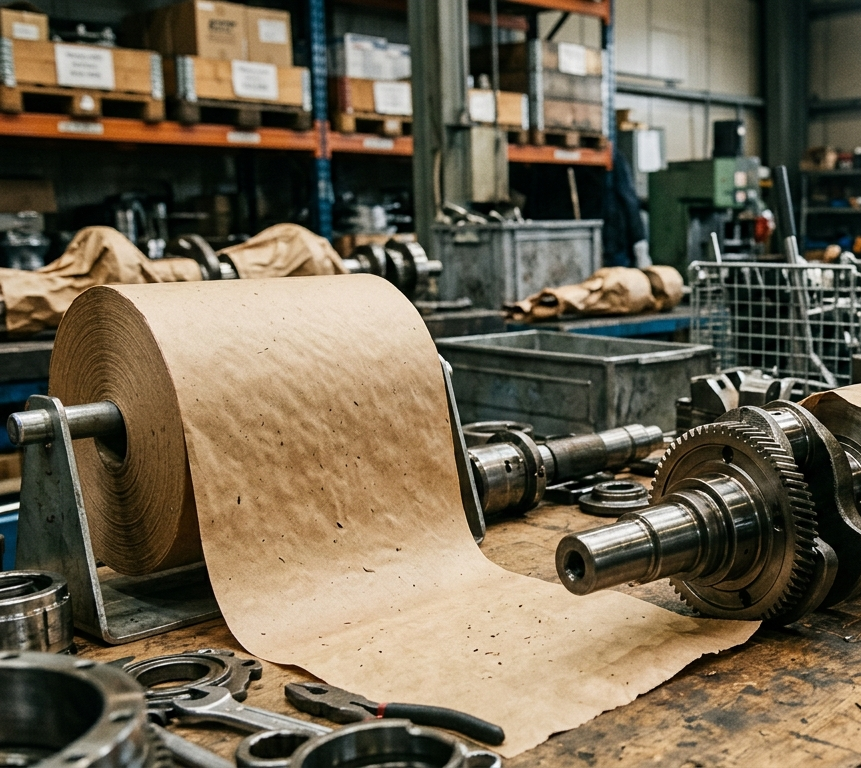
Recycled kraft paper is produced from recovered fiber — primarily old corrugated containers (OCC), mixed office paper, and paper mill off-cuts. Each recycling cycle shortens fibers and removes bonding capacity, which is why recycled kraft is generally weaker than virgin kraft at equivalent basis weights. Recycled kraft paper can carry FSC Recycled certification, confirming that all fiber originates from reclaimed sources — the preferred sustainability credential for buyers with post-consumer content commitments.
Strength and Durability Comparison
The most significant practical difference is tensile strength in the machine direction (MD), which governs how much load a bag, wrap, or laminate can bear before tearing. Virgin kraft typically achieves 8–12 kN/m MD tensile at 90 gsm basis weight, while recycled grade at the same basis weight delivers 5–8 kN/m.
Burst strength — relevant for bags, sacks, and heavy wrapping — follows a similar pattern. Heavy-duty valve sacks for cement, chemicals, and agricultural products typically require burst strength of 250 kPa or higher, a threshold only virgin kraft reliably meets at standard basis weights.
- Heavy bags (>25 kg fill) — virgin kraft at 90–120 gsm is the standard choice
- Medium bags (10–25 kg) — virgin or high-grade recycled kraft depending on fill density
- Interleaving and protective wrap — recycled kraft at 40–70 gsm performs well
- Secondary corrugated liners — recycled kraft (semi-chem fluting) is cost-optimised
Moisture Resistance and Barrier Performance
Virgin kraft’s denser, longer fiber matrix resists liquid penetration better than recycled grades. For packaging exposed to humidity, condensation, or outdoor storage, virgin kraft maintains structural integrity longer. Where moisture resistance is critical — such as agricultural sacks stored in humid warehouses — virgin kraft is the appropriate base material, often combined with wet-strength resin treatment or PE lamination. Contact カンチュアン・ペーパーズ for moisture-resistant kraft grade specifications.
Sustainability Credentials and Positioning
Both grades support credible sustainability claims but with different narratives. For technical measurement of these grades against international standards, the TAPPI (Technical Association of Pulp and Paper Industry) publishes test methods (T-400 series for クラフト紙) that provide the framework for objective comparison.
- Virgin kraft FSC 100%: “Sourced from sustainably managed forests — protecting biodiversity and forest communities”
- Recycled kraft FSC Recycled: “Made from 100% reclaimed fiber — keeping materials out of landfill and reducing tree harvest”
Cost Analysis
Virgin kraft paper commands a 15–30% premium over comparable recycled kraft depending on basis weight and certification. For a packaging converter running 500 tonnes per year, the cost differential can be $150,000–$300,000 annually at current market prices. However, virgin kraft often allows lighter basis weight selection while maintaining required burst strength — partially or fully offsetting the per-tonne cost premium.
Application Matching Guide
- Heavy industrial bags (cement, chemicals, pet food) → Virgin kraft 90–120 gsm
- Branded retail packaging requiring print quality → Virgin kraft 60–90 gsm with FSC chain of custody
- Agricultural produce wrapping → Virgin or high-recycled-content kraft, depending on humidity exposure
- Interleaving between steel coils or glass sheets → Recycled kraft 40–60 gsm
- E-commerce void fill and cushioning → Recycled kraft 45–70 gsm
- Food-grade direct contact packaging → Virgin kraft with FDA-compliant certification
Kangchuang Papers Product Range
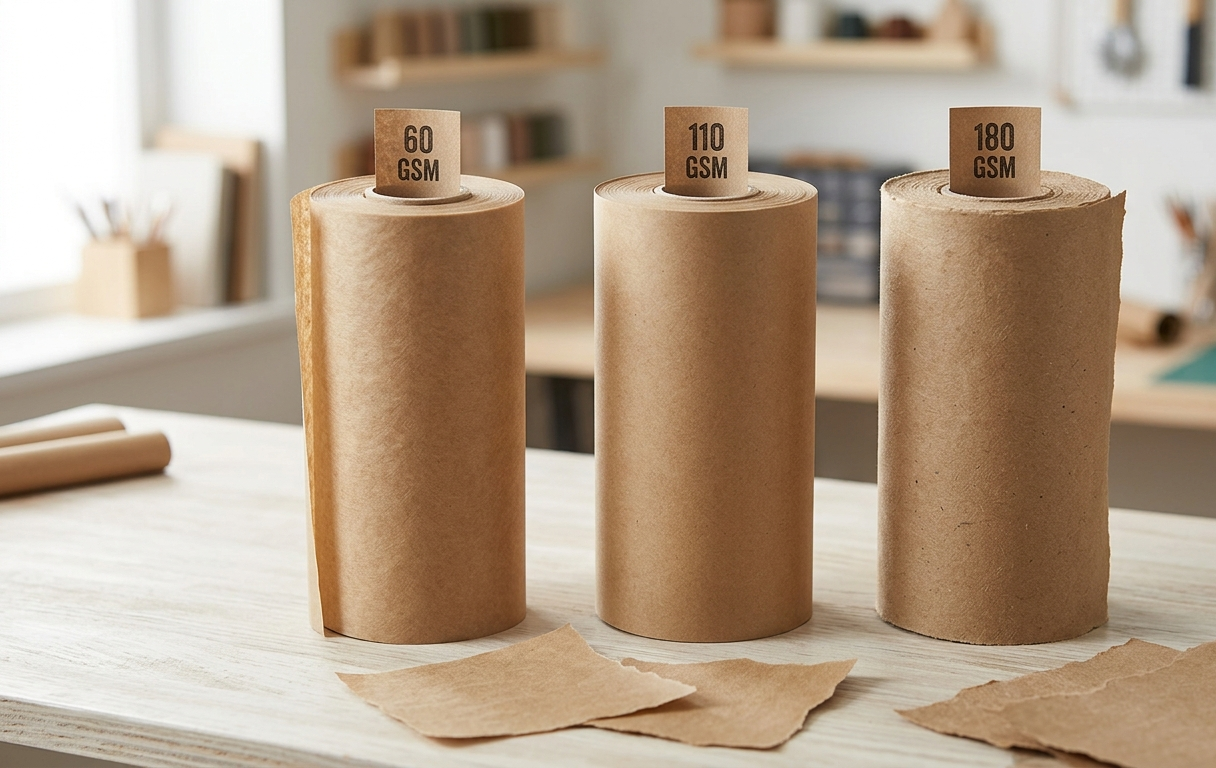
Kangchuang Papers produces both virgin and recycled kraft paper grades from 35 to 150 gsm for packaging converters, bag manufacturers, and industrial OEMs. Custom basis weights, widths, and FSC certification are available. Visit Kangchuang Papers to request grade specifications and pricing for your specific application.
結論
For heavy-duty industrial packaging where burst strength, moisture resistance, and print performance are non-negotiable, virgin kraft paper is the technically correct choice. For applications where sustainability messaging, cost reduction, and moderate strength are priorities, recycled kraft is the practical selection. Kangchuang Papers offers both grades with FSC certification to match your packaging program requirements.
よくある質問
What is the main strength difference between virgin and recycled kraft paper?
Virgin kraft paper typically has tensile strength 20 to 40 percent higher than recycled kraft at the same basis weight, because virgin fibers are longer and undamaged. Recycled fibers are shorter due to repeated pulping cycles, reducing both tensile and burst strength.
Can recycled kraft paper be certified FSC?
Yes. Recycled kraft paper can carry FSC Recycled certification, confirming all wood fiber content comes from reclaimed materials. This differs from FSC Mix or FSC 100% certifications applicable to virgin fiber products.
Which is better for heavy-duty packaging?
Virgin kraft paper is generally preferred for heavy-duty packaging requiring burst strength above 200 kPa or tensile strength above 8 kN/m. Recycled kraft suits medium-duty wrapping, interleaving, and secondary packaging where strength specifications are less demanding.
Is virgin kraft paper more expensive than recycled?
Yes. Virgin kraft paper is typically 15 to 30 percent more expensive than comparable recycled kraft at similar basis weights, reflecting the cost difference in raw material sourcing and kraft pulping versus recovered fiber processing.
What basis weights does Kangchuang Papers offer?
Kangchuang Papers produces industrial kraft paper from 35 gsm to 150 gsm in both virgin and recycled grades, with custom basis weights available for packaging converter and industrial OEM programs.
What print quality can be achieved on kraft paper?
Virgin kraft paper offers superior print quality due to more uniform surface texture and less contamination from recycled content. Flexographic and digital printing perform better on virgin kraft for branded packaging applications requiring consistent color density.