Ir al contenido
Si alguna vez has intentado conseguir papel de embalaje que evite el deslustre y te han dicho que el ‘papel de seda sin ácido’ es lo mismo que el ‘papel sin azufre’, te has topado con uno de los errores más comunes y costosos en el ámbito del embalaje industrial.
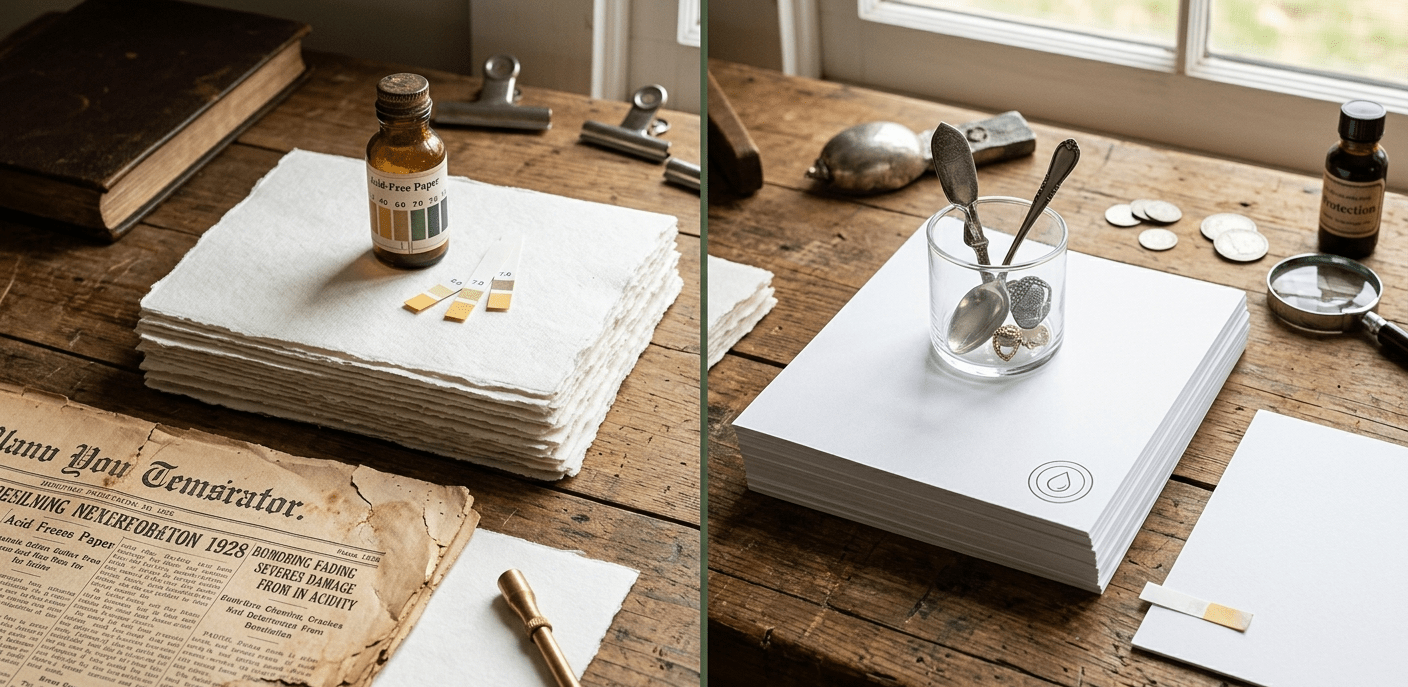
No son lo mismo. Abordan mecanismos de degradación química totalmente distintos. En el caso de la plata, el cobre y los componentes electrónicos chapados, normalmente se necesitan ambos; y limitarse a uno de ellos, dando por sentado que se dispone de ambos, es lo que provoca el deslustre y los daños por corrosión, a pesar de utilizar un material de embalaje ‘adecuado’.
En esta entrada se aclara exactamente qué significa cada especificación, contra qué protege cada una y cómo especificarlas correctamente.
Qué significa ‘sin ácido’… y qué no significa
El papel libre de ácido se define por su valor de pH; concretamente, se trata de papel con un pH de 7,0 o superior (de neutro a alcalino) que no contiene compuestos ácidos libres que puedan degradar el papel o contaminar los materiales adyacentes.
El problema que resuelve el papel sin ácido: el papel tradicional se encolaba con una fórmula química a base de alumbre y colofonia que generaba ácido sulfúrico residual a medida que el papel envejecía, lo que provocaba que el propio papel se volviera quebradizo y adquiriera un tono marrón con el paso del tiempo, además de liberar vapores ácidos que corroían las superficies metálicas y degradaban los materiales adyacentes. El papel sin ácido elimina este problema mediante el uso de una composición química de encolado neutra o alcalina.
Lo que el papel libre de ácido NO controla: la presencia de compuestos de azufre. Un papel puede ser libre de ácido 100% (pH 8,5) y, aun así, contener entre 50 y 200 ppm de azufre procedente del proceso de fabricación de pasta kraft. Este azufre desprende sulfuro de hidrógeno (H₂S), lo cual no tiene nada que ver con el pH y es un mecanismo químico totalmente distinto.
| Diferencia fundamental: el pH es una medida de la química ácido-base. El contenido en azufre es una medida de un contaminante elemental totalmente distinto. El papel sin ácido controla el pH. El papel sin azufre controla el azufre. Ninguna de estas especificaciones implica automáticamente la otra. |
Qué significa ‘sin azufre’… y qué no significa
El papel sin azufre (también denominado papel con bajo contenido en azufre) se define por su contenido total de azufre; concretamente, se trata de papel con un contenido de azufre inferior a 5 ppm (partes por millón) que no desprende sulfuro de hidrógeno a un ritmo suficiente como para empañar la plata, de cobre u otras superficies metálicas reactivas en condiciones ambientales.
El problema que resuelve el papel sin azufre: papel fabricado con fibra kraft El proceso contiene compuestos de azufre residuales (procedentes del sulfuro de sodio utilizado en la cocción) que desprenden H₂S a temperatura ambiente. Este H₂S reacciona con la plata para formar sulfuro de plata negro (Ag₂S) y con el cobre para formar sulfuro de cobre; ambos compuestos reducen la conductividad eléctrica y la reflectividad óptica.
Lo que el papel sin azufre NO controla necesariamente: el pH. Un papel puede estar libre de azufre (<5 ppm) y, aun así, ser ácido (pH inferior a 7,0) si se fabrica sin encolado alcalino. El papel ácido sin azufre evitaría el deslustre por H₂S, pero podría seguir provocando, con el tiempo, la degradación ácida de los materiales sensibles al papel.
Tabla comparativa: qué controla cada especificación
| PROPIEDAD | PAPEL SIN ÁCIDOS | PAPEL SIN AZUFRE |
| Regula el pH | Sí — pH 7,0–8,5 | No necesariamente |
| Controla el contenido de azufre | No necesariamente | Sí — <5 ppm |
| Evita que la plata se empañe por el H₂S | No | Sí |
| Evita la corrosión ácida de los metales | Sí | No directamente |
| Evita que el papel se amarillee o se vuelva quebradizo | Sí | No directamente |
| Método de ensayo | pH (extracto acuoso) | XRF / análisis químico en húmedo |
| Umbral de especificación | pH ≥ 7,0 | Azufre < 5 ppm |
¿Qué aplicaciones requieren qué especificaciones?
Almacenamiento de joyas y cubertería de plata
Requisitos: TANTO sin ácido COMO sin azufre. La plata se empaña por el H₂S (por lo que debe ser sin azufre) Y por los gases ácidos derivados de la degradación del papel (por lo que debe ser sin ácido). El uso exclusivo de papel sin azufre que no sea libre de ácidos sigue exponiendo a la plata a los mecanismos de oxidación por gases ácidos. El uso exclusivo de papel libre de ácidos que contenga azufre sigue provocando la oxidación por H₂S.
Soportes SMD y componentes LED chapados en plata
Requisitos: TANTO libre de ácidos COMO libre de azufre —siendo la especificación relativa al azufre el factor más importante, ya que el deslustre provocado por el H₂S del papel es el modo de fallo más habitual—. En el caso de los componentes electrónicos, también es importante que el pH se sitúe entre 7,0 y 8,5, ya que el papel ácido puede contribuir a la contaminación iónica, lo que afecta a la limpieza de la superficie de las placas de circuito impreso y a su soldabilidad.
Accesorios y barras colectoras de cobre
Requisitos: Principalmente libre de azufre (el cobre reacciona con el H₂S para formar sulfuro de cobre), siendo la ausencia de ácidos un requisito secundario importante. Norma papel kraft para embalaje provoca una rápida oxidación del cobre a través de mecanismos relacionados tanto con el H₂S como con los gases ácidos durante un almacenamiento de varios meses.
Archivo y conservación de documentos
Requisitos: Solo sin ácido (pH ≥ 7,0 con reserva alcalina). Los documentos históricos, las fotografías y los materiales de archivo se degradan por el papel ácido, no por el H₂S. La especificación «sin azufre» no es relevante para aplicaciones de archivo.
Conectores chapados en oro
Requisitos: Principalmente, debe estar libre de azufre (la contaminación por sulfuro del oro reduce la adherencia de las uniones de alambre y la soldabilidad de los marcos de conductores de oro). Que esté libre de ácidos es un requisito secundario. El oro puro no forma una pátina de sulfuro visible tan notable como la plata, pero la química superficial de los componentes electrónicos chapados en oro es sensible a la contaminación por trazas de sulfuro.
Las especificaciones completas: qué debes pedirle a tu proveedor de papel
Para una protección integral de los componentes electrónicos de plata, cobre y chapados, especifique un papel que reúna las siguientes características:
- Contenido en azufre: <5 ppm de azufre total — verificado por Análisis por XRF con informe de ensayo por lotes
- Valor del pH: 7,0–8,5 (sin ácido, reserva alcalina) — verificado mediante un ensayo del pH del extracto acuoso
- Documentación: Informes de ensayo a nivel de lote para ambos parámetros, no declaraciones relativas a la calidad del producto
Un proveedor que afirme que ‘nuestro papel sin ácido cumple con sus requisitos antideslustramiento’ sin aportar datos de las pruebas de azufre no está controlando lo que realmente importa. Del mismo modo, un proveedor que cite una especificación «sin azufre» sin documentación sobre el pH podría estar vendiendo papel ácido que solo cumple la mitad de los requisitos.
Es necesario que el informe de ensayo incluya ambos datos. Compruébalos al recibirlos. El coste de los ensayos es insignificante en comparación con el coste que supondría un fallo en campo debido a la oxidación de un componente.
| El papel de embalaje sin azufre de Kangchuang Paper no contiene ácido (pH 7,0–8,5) ni azufre (<5 ppm), y cada envío incluye informes de análisis por lotes para ambos parámetros. Disponible en gramajes de 35 a 150 g/m², en cualquier ancho. Muestras gratuitas para EE. UU. → kangchuangpapers.com/product/sulfur-free-packaging-paper/ |
Preguntas frecuentes
¿Puedo utilizar papel de seda normal como sustituto sin ácido y sin azufre?
No de forma fiable. El papel de seda de consumo suele ser libre de ácidos según su pH, pero rara vez se somete a pruebas ni se especifica su contenido en azufre. A menos que el papel de seda venga acompañado de un informe de análisis de azufre del lote que confirme un valor inferior a 5 ppm, su contenido en azufre es desconocido y probablemente suficiente para provocar el deslustre de las superficies de plata.
¿Cómo puedo comprobar si el papel de embalaje que utilizo actualmente no contiene azufre?
La prueba definitiva es el análisis por XRF o la determinación química en húmedo del contenido de azufre en un laboratorio acreditado. Como prueba de cribado, puedes utilizar la prueba de oxidación de la plata en 7 días descrita anteriormente (bolsa sellada con papel frente a bolsa sin papel). Sin embargo, solo los análisis de laboratorio te proporcionan el valor real en ppm necesario para cumplir con las especificaciones.
¿Existe algún tipo de papel que sea, por naturaleza, tanto libre de ácido como libre de azufre, sin necesidad de un proceso de fabricación especial?
No. Ambas propiedades requieren un control minucioso durante la fabricación. El papel sin ácido requiere un tratamiento químico específico para el encolado. El papel sin azufre requiere una selección y un proceso de fabricación controlados de la pasta de papel. Un papel que afirme cumplir ambas condiciones sin haber sido sometido a pruebas es una afirmación sin verificar, no una especificación.
¿Un pH más alto implica una mayor protección contra el deslustre?
Un pH más alto mejora la protección contra la corrosión de origen ácido y proporciona una reserva alcalina que evita que el papel se vuelva ácido con el paso del tiempo (algo importante para el almacenamiento a largo plazo). Sin embargo, no influye en el deslustre por sulfuro: la reactividad del H₂S con la plata es independiente del pH del papel. Sigue siendo necesario que el contenido en azufre sea bajo, independientemente del pH.