コンテンツにスキップ

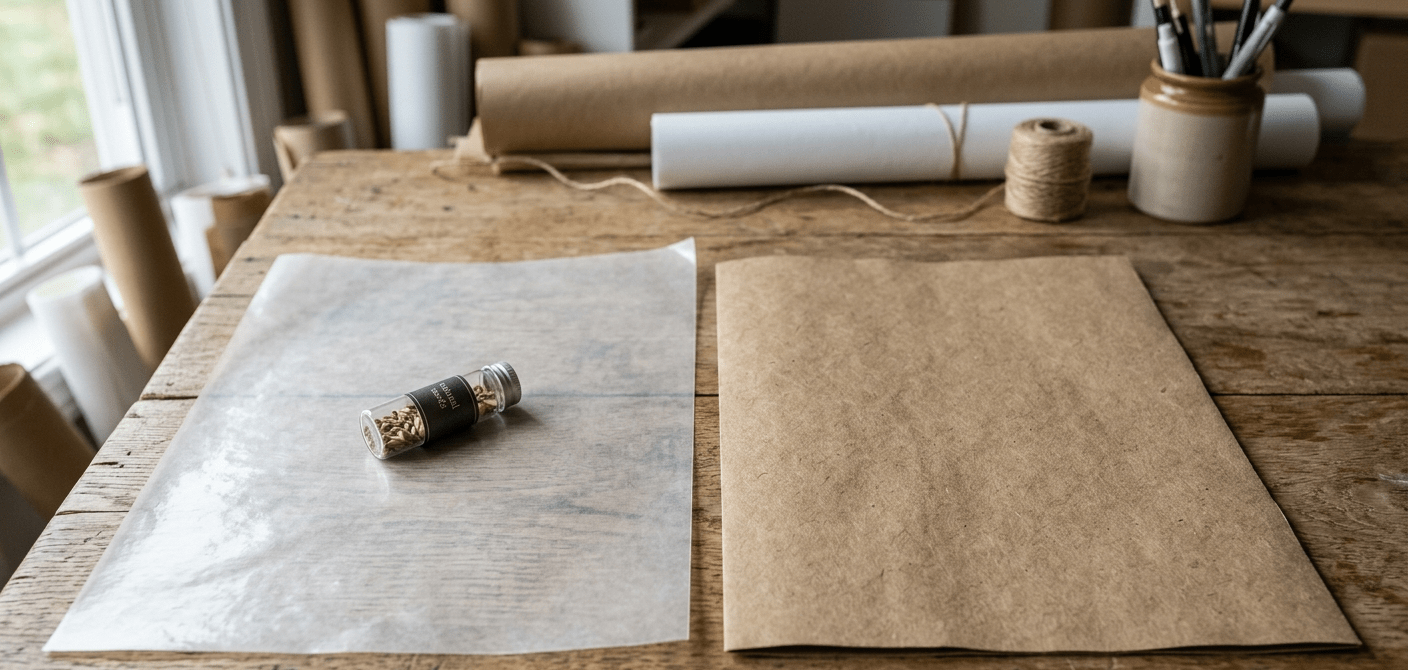
工業用途向けにグラシン紙とクラフト紙のどちらを選ぶか迷っている包装資材の購入者にとって、その判断は一つの根本的な問いに帰着します。すなわち、その用途にはグラシン紙だけが持つバリア性が必要なのか、それともクラフト紙が持つ機械的強度が必要なのか、ということです。どちらも紙を基材としているとはいえ、これらは互いに代替可能な素材ではありません。 グラシン紙は、超カレンダー加工が施され、ほぼ透明で、空気、水分、油脂に対してほぼ不透性となっています。これらの特性は、 クラフト紙, 、たとえ180 GSMであっても、重量がいくらであっても及ばない。クラフト紙は、同等の重量のグラシン紙では到底及ばないほどの引張強度と耐引裂性を備えている。.
指定 電子機器用プリント基板(PCB)用のクラフト紙 基板が自動ピック・アンド・プレース装置を通過するインターリービング用途において、クラフト紙からの微粒子の脱落がはんだペーストを汚染することが判明した場合、これは用途の不適合であり、生産ロットごとに$5,000~$15,000の再作業コストが発生します。 引張強度が唯一の性能要件である過酷なパレット包装用途にグラシン紙を指定すると、実際には使用していないバリア特性のために、必要以上に$3~$5/kgのコストを支払うことになります。.
本ガイドでは、グラシン紙とクラフト紙が構造的にどのようなものか、両者を区別する性能特性、それぞれが優位性を発揮する具体的な用途、および両者が検討対象となる産業用包装のシナリオにおける選定マトリックスについて解説します。.
グラシン紙とは一体何なのか――そしてクラフト紙との違い
| 物件 | グラシン紙 | クラフト紙 |
|---|---|---|
| 製造工程 | 木材パルプ紙。高圧・高温下でスーパーカレンダー加工を施し、繊維構造を崩したものである。 | クラフト(強靭)パルプ紙。通常は未漂白で、強いカレンダー加工を施さずに乾燥させたもの。 |
| 外観 | 半透明で、滑らかで、つやがある | 茶色/クリーム色、不透明、表面がややざらついている |
| 密度/不透明度 | 半透明 — 光が通る | 完全に不透明 |
| 坪量範囲 | 25~120 GSM(一般的な用途では40~80 GSM) | 40~180 GSM |
| 耐油性 | 素晴らしい――スーパーカレンダー加工により繊維の隙間が塞がれる | 低~中程度 — コーティングされていないとグリースが浸透する |
| 通気性 | 極めて低い — 空気に対してほぼ不透過性 | 高 — 空気や湿気が通りやすい |
| 耐湿性 | 中程度 — クラフト紙よりは優れているが、防水ではない | 低 — コーティングされていない限り、湿気を吸収しやすい |
| 引張強度 | 重量に対する比率が低い — スーパーカレンダー加工により繊維間の結合が弱まる | 高 — クラフトパルプの製造工程では、引張強度が特に維持される |
| 耐引裂性 | 低 — 繊維の方向に沿って簡単に破れる | 高い — クラフト紙の基本的な強度特性 |
| 微粒子の脱落 | 極めて低い — 密閉された繊維構造 | 中程度 — 繊維構造が緩く、繊維が抜けやすい |
| 食品接触に関するコンプライアンス | FDA 21 CFR 176 に準拠(コーティングなし) | FDA 21 CFR 176 に準拠(無漂白、無コーティング) |
| 1kgあたりのコスト | 高値 — $1.50~$2.80/kg | 下限 — $0.80~$1.60/kg |
グラシン紙の真価が発揮される場面:具体的な用途
1. 電子機器とプリント基板のインターリーブ
グラシンは、粒子脱落がほぼゼロで通気性が低いため、組み立てや輸送の際、PCBの層間に挟む標準的な素材となっています。一方、クラフト紙は繊維構造が開放されているため、繊維が脱落し、はんだペーストを汚染したり、銅配線を酸化させたりします。 グラシン紙の密閉されたスーパーカレンダー加工された表面は、滑らかで粒子を含まない界面を形成し、汚染のリスクなしに敏感な部品の表面を保護します。標準仕様:40~60 GSMのグラシン紙、無硫黄、貴金属保護のために防錆剤が塗布されているか、またはパルプに配合されています。.
2. 剥離シートの用途
グラシン紙の滑らかで均一な表面は、シリコーン製剥離ライナーの製造に必要な均一なコーティング面を提供します。感圧接着ラベル、医療用ドレッシング、工業用テープでは、剥離ライナーの基材としてグラシン紙が使用されています。クラフト紙の粗く吸水性の高い表面では、安定した剥離力を得るために必要な均一なシリコーンコーティングを施すことができないからです。 世界の剥離ライナー市場では、基材としてほぼ例外なくグラシンが使用されています。.
3. Food Packaging with Grease Resistance Requirements
Butter wrappers, sandwich paper, bakery interleaving, and charcuterie wrapping require grease resistance that uncoated kraft cannot provide. Glassine’s supercalendered structure provides inherent grease resistance (FDA 21 CFR 176 compliant) without additional coating — reducing cost and maintaining food contact compatibility. For premium bakery and deli applications where the packaging is customer-facing, glassine’s smooth, semi-transparent appearance also provides aesthetic value.
4. Pharmaceutical and Medical Packaging
Pharmaceutical blister pack base materials, sachet liner papers, and medical device wrap use glassine for its near-impermeability to air and moisture (without the barrier properties of foil-laminated structures), FDA compliance, and low particulate generation. Where full aluminium foil barrier is not required but a degree of moisture protection is needed, glassine outperforms kraft in pharmaceutical packaging.
5. Precision Metal Component Interleaving
Bearing races, precision gear components, and optical elements use glassine interleaving to prevent metal-to-metal contact, corrosion, and scratching during shipping. Glassine’s sulfur-free formulation (critical — standard paper contains sulfur compounds that tarnish silver, copper, and certain precious metals) and smooth surface prevent the abrasion and galvanic corrosion that rough kraft paper would cause on polished precision surfaces.
Where Kraft Paper Wins: The Specific Applications
1. Heavy Packing and Void Fill
Kraft paper’s tensile strength (3–5× glassine at equivalent weight) makes it the only suitable paper substrate for pallet wrapping, case lining, and high-force void fill applications. Glassine tears immediately under the mechanical stress of pallet-level packaging operations.
2. Industrial Wrapping for Large Parts
Machined parts, structural components, and heavy industrial products wrapped for transit use 90–120 GSM kraft paper. The tensile strength survives the wrapping tension and handling forces that would split glassine.
3. Multi-Wall Industrial Bags and Sacks
Multi-wall kraft bags for cement, flour, chemical granules, and building materials require the tensile and burst strength that only kraft provides. Glassine has no role in sack and bag applications.
4. E-Commerce Void Fill and Cushioning
Crumpled kraft provides the elastic void fill properties (spring-back after compression) that glassine cannot provide — glassine doesn’t crumple into effective cushioning due to its brittle supercalendered structure.
Decision Matrix: Glassine vs Kraft Paper
| 用途 | Use Glassine | Use Kraft | Reason |
|---|---|---|---|
| PCB / electronics interleaving | Yes — zero particulate shedding | No — fibre shedding contaminates | Cleanliness and low particulate generation |
| Release liner base | Yes — required | No — surface too rough for silicone coating | Smooth, closed surface required |
| Grease-resistant food wrap | Yes — inherent grease resistance | Only if coated (adds cost) | Glassine provides uncoated grease resistance |
| Pharmaceutical sachet liner | Yes — air/moisture control | No — too permeable | Near-impermeability to air and moisture |
| Precision metal interleaving | Yes (sulfur-free grade) | No — sulfur tarnishes metals | Sulfur-free, smooth, non-abrasive surface |
| Pallet wrapping | No — tears | Yes — tensile strength | Mechanical strength requirement |
| Void fill / cushioning | No — no spring-back | Yes — crumples into effective cushioning | Elastic void fill properties |
| Multi-wall industrial bags | いいえ | はい | Burst and tensile strength |
| E-commerce gift wrap | Yes — premium look | Yes — natural look | Both work; cost and aesthetics determine choice |
| Heavy industrial parts wrap | No — tears | はい | Tensile and puncture resistance |
よくある質問
グラシン紙は何でできているのですか?
グラシン紙は、高いフリーネス(長くて精製された繊維)まで精製された木材パルプを原料とし、研磨された鋼製ローラーの間で高圧・高温下においてスーパーカレンダー加工を施して製造されます。 このスーパーカレンダー加工により、紙が圧縮・緻密化され、繊維間の空隙が潰されることで、グラシン紙を他の紙と区別する半透明で滑らか、かつ比較的気密性の高い表面が形成されます。 コーティングは一切施されておらず、そのバリア性は繊維網の物理的な圧縮によってのみ得られます。その結果、この紙は通気性が極めて低く、表面が滑らかで、優れた耐油性を備えています。.
グラシン紙は食品に安全ですか?
Yes. Uncoated glassine paper manufactured from virgin wood pulp complies with FDA 21 CFR 176 food contact paper requirements. Glassine’s smooth, low-particulate surface and freedom from printing inks or coatings makes it suitable for direct food contact applications including butter wrapping, bakery interleaving, charcuterie wrap, and deli paper. For pharmaceutical applications, glassine must also comply with relevant USP or pharmacopoeia specifications depending on the device class and regulatory jurisdiction.
PCBのインターリービングにおいて、グラシン紙はクラフト紙の代わりになるでしょうか?
Yes — and it is the correct replacement. Glassine’s supercalendered, closed fibre structure produces near-zero particulate shedding, making it the appropriate choice for PCB interleaving applications where kraft paper’s fibre shedding would contaminate solder paste or oxidise exposed copper traces. The correct specification for PCB interleaving glassine is: 40–60 GSM, sulfur-free (confirmed by sulfur-free test report), with volatile corrosion inhibitor (VCI) compound if copper or tin protection over extended storage is required.
グラシン紙とクラフト紙では、コストにどのような違いがありますか?
Glassine paper costs approximately $1.50–$2.80/kg depending on grade (sulfur-free, anti-tarnish, release-liner grade) and order volume. Standard unbleached kraft paper costs $0.80–$1.60/kg. The glassine premium of 50–100% over kraft is driven by the additional supercalendering processing and the higher-quality fibre required to produce consistent transparency and barrier properties. For applications that genuinely require glassine’s barrier properties (electronics, pharmaceutical, precision metal interleaving), the cost difference is justified. For applications where only mechanical strength or wrapping coverage is needed, kraft at lower cost is the correct specification.
Conclusion: Glassine for Barrier; Kraft for Strength
- Glassine wins when the application requires grease resistance, low air permeability, zero particulate shedding, or smooth non-abrasive surfaces — electronics, pharmaceutical, release liner, food grease wrap
- Kraft wins when the application requires tensile strength, tear resistance, void fill spring-back, or heavy-duty industrial wrapping
- The cost premium of glassine over kraft (50–100%) is justified when its barrier properties are functionally required and not justified when only mechanical coverage is needed