Ir para o conteúdo
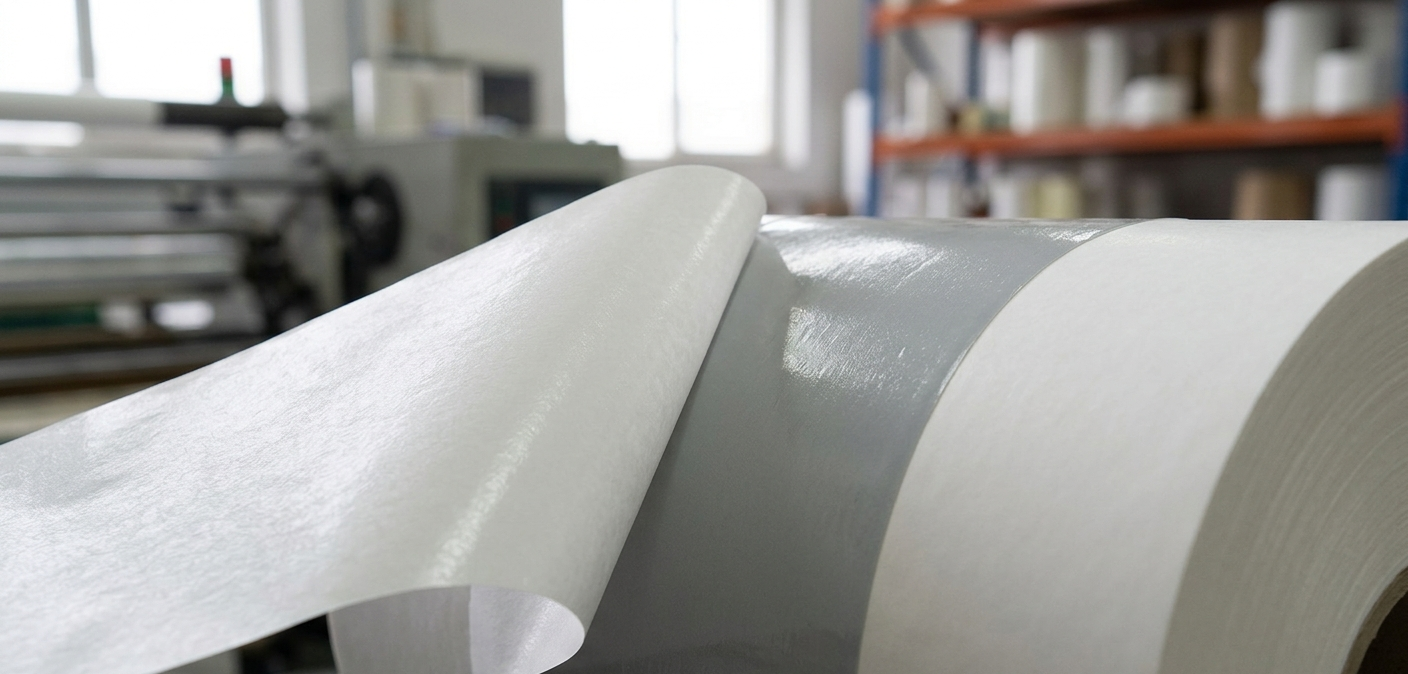
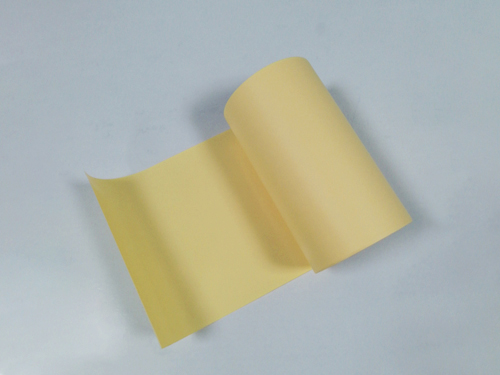
 Kangchuang silicone release paper is a precision-coated release liner in which a base paper substrate (glassine, SCK, CCK, or PE-coated kraft) is coated with a cured silicone layer that allows clean, controlled separation from pressure-sensitive adhesives without adhesive transfer, without adhesive degradation, and at controlled release force values. Available in easy (15–25 cN/cm), medium (25–50 cN/cm), and tight (50–100+ cN/cm) release formulations, with single-side and double-side coating options, our release paper is manufactured for label stock producers, adhesive tape converters, medical device packaging, hygiene product manufacturing, and composite lamination — factory-direct from our ISO 9001 certified Dongguan facility, with free DHL Express samples to the United States.
What is Silicone Release Paper — and How Does It Work?
Release paper is a substrate that has been coated with a material that has very low surface energy — typically cured silicone — which prevents adhesives from forming strong bonds with the surface. Instead of sticking, the adhesive contacts the low-energy silicone surface with only weak van der Waals forces, allowing it to be peeled away cleanly at controlled force without leaving residue on the release paper and without losing adhesive tack from the product backing.
The chemistry is precise: uncured silicone is a liquid polymer. When applied to paper and heated to cure (typically at 150°C–200°C), the silicone chains cross-link into a three-dimensional network that anchors firmly to the paper surface and presents an extremely low-energy surface (approximately 20–22 mN/m surface energy) to any adhesive placed against it. This low surface energy is the mechanism that creates the release property — adhesives cannot form strong bonds with surfaces below approximately 25 mN/m surface energy.
Release force — the peel force required to separate the liner from the adhesive at a specified peel speed and angle (standardized at 180° and 300mm/min per FINAT FTM3 or equivalent) — is controlled by the silicone formulation, the cure density, and the coat weight. Lighter silicone applications (0.8–1.2 g/m²) and lower-crosslink-density formulations produce easy release. Heavier applications (1.5–2.5 g/m²) and higher crosslink densities produce tighter release values required for aggressive adhesives.
Base Paper Types — How the Base Affects Release Performance
Glassine Paper Base
Glassine is a smooth, semi-transparent, highly calendered paper with very low porosity. Its smooth surface allows the silicone coating to form a continuous, even layer at low coat weights (0.8–1.2 g/m²), producing consistent release performance. Glassine release paper is the industry standard base for pressure-sensitive label stock, pharmaceutical blister backing, and food-contact applications. It is available in 40–90gsm.
SCK (Super-Calendered Kraft) Base
SCK is a natural kraft paper that has been intensively calendered to produce a smooth surface without clay coating. It is less expensive than glassine with similar smoothness, making it the cost-effective choice for high-volume label stock backing. SCK release paper is widely used in logistics labels, retail labels, and general purpose adhesive applications. Available in 50–90gsm.
CCK (Clay-Coated Kraft) Base
CCK base paper has a mineral clay coating on the surface that provides excellent smoothness and printability while maintaining the high tensile strength of the kraft base. This makes CCK release paper the preferred choice for industrial tape backing, composite prepreg release liners, and medical device packaging where dimensional stability and tear resistance under processing conditions are required. Available in 60–150gsm.
PE-Coated Kraft Base
For applications in humid environments or requiring moisture resistance in the release liner itself, a PE-coated kraft base paper provides the moisture barrier of PE coating while the silicone layer on top provides the release function. This construction is used in hygiene product manufacturing (sanitary napkins, baby diapers) where the release liner is in contact with moisture during use, and in outdoor adhesive applications where the liner must not delaminate due to humidity.
| SPECIFICATION | DETAILS |
| Base Paper Options | Glassine | SCK (Super-Calendered Kraft) | CCK (Clay-Coated Kraft) | PE-Coated Kraft |
| Base Paper GSM | 40gsm to 150gsm depending on base type and application |
| Silicone System | Thermal-cure, 100% solvent-free silicone | Electron-beam (UV) cure on request |
| Silicone Coat Weight | 0.8–1.2 g/m² (easy release) | 1.2–1.8 g/m² (medium release) | 1.8–2.5 g/m² (tight release) |
| Release Force Range | Easy: 15–25 cN/cm | Medium: 25–50 cN/cm | Tight: 50–100+ cN/cm (FINAT FTM3, 300mm/min, 180°) |
| Coating Side | Single-side (1S) standard | Double-side differential release (2S) available |
| Temperature Range | -40°C to +150°C service range (standard thermal-cure silicone) |
| Roll Width | 100mm to 1,600mm — custom slit to specification |
| Surface Roughness | Glassine base: Ra < 0.5 µm | SCK: Ra 0.5–1.0 µm | CCK: Ra < 0.8 µm |
| Residual Adhesion | >90% (standard) — adhesive retains >90% tack after contact with release liner surface |
| Compliance | ISO 9001:2015 | RoHS compliant | Food-contact grade on request (FDA 21 CFR 177.2600) |
| MOQ | 1,000kg standard | Sample: 1 roll (~15–20kg) — free DHL delivery to USA |
| Lead Time | Standard grades: 15–20 days | Custom release values: 20–25 days |
Silicone release paper is a paper substrate coated with a cured silicone polymer layer that creates an extremely low-energy surface (approximately 20–22 mN/m surface energy). Pressure-sensitive adhesives cannot form strong bonds with surfaces below approximately 25 mN/m surface energy, so instead of sticking, the adhesive contacts the silicone surface with only weak van der Waals forces. This allows the adhesive-coated product (label, tape, or medical device) to be peeled away from the release liner cleanly, at a controlled force, without leaving adhesive residue on the liner and without the adhesive losing its tack on the product face.
Release force is the peel force required to separate the release liner from the adhesive, typically measured in centinewtons per centimeter (cN/cm) at 180° peel angle and 300mm/min peel speed (FINAT FTM3 method). The correct release force for your application depends on your adhesive type and dispensing method: Easy release (15–25 cN/cm) for repositionable labels and low-tack adhesives. Medium release (25–50 cN/cm) for standard PSA labels and general tapes. Tight release (50–100 cN/cm) for structural tapes and high-tack adhesives. Very tight (100+ cN/cm) for aggressive adhesives and composite prepreg liners. If you are unsure which release value is correct, request our sample pack with three different release values and test with your specific adhesive.
Glassine and SCK are both smooth base papers used for release liner production, but produced differently. Glassine is a highly calendered, semi-transparent paper with a naturally smooth, dense surface and low porosity — it is the premium base for label stock applications requiring excellent printability and consistent appearance. SCK (Super-Calendered Kraft) is a natural kraft paper intensively calendered to smooth its surface without clay coating — it is less expensive than glassine and is widely used for high-volume label backing and general release liner applications where the aesthetic of the liner is less important than cost. Kangchuang supplies both types.
Non-silicone release paper uses a non-silicone coating chemistry — typically polyvinyl alcohol (PVA), polyethylene (PE), or fluorocarbon-based coatings — to create the release surface instead of silicone. Non-silicone release paper is used in applications where silicone migration or silicone contamination is unacceptable: for example, in automotive painting processes (silicone causes paint adhesion failures), certain electronics assembly operations (silicone interferes with wire bonding), and specialty adhesive applications where silicone interferes with the adhesive chemistry. Kangchuang produces non-silicone release paper on request — please specify your reason for requiring non-silicone, as this guides the coating chemistry selection.
Residual adhesion is the percentage of adhesive tack retained on the product face after contact with the release liner. A residual adhesion of >90% means the adhesive retains more than 90% of its original tack after the liner is peeled away — indicating no significant adhesive transfer to the liner surface and no silicone migration to the adhesive. Low residual adhesion (below 80%) indicates silicone is migrating from the liner surface into the adhesive layer, permanently reducing adhesive tack. All Kangchuang production batches are tested for residual adhesion — results should be >90% for standard applications.
No. Silicone release paper for industrial applications is not the same as food-grade parchment paper or baking paper. Industrial release paper may contain silicone formulations that are not approved for food contact, and the base paper (glassine, CCK) may not meet food-safety standards for direct food contact. Baking parchment paper is a specifically manufactured food-grade product using food-grade silicone and food-grade base paper, tested to FDA and EU food contact regulations. Do not use industrial release paper for food applications. Kangchuang does not supply baking parchment paper.
For prepreg carbon fiber or fiberglass composite manufacturing, CCK (Clay-Coated Kraft) base paper in 100–150gsm with tight release values (50–100+ cN/cm) is the standard industry specification. CCK provides the dimensional stability and tear resistance needed to withstand autoclave processing conditions (up to 180°C, 7 bar pressure) without delaminating. The tight release value ensures the prepreg resin doesn’t spontaneously separate from the carrier paper during handling and layup. Contact us with your resin system, cure temperature, and layup process details for a custom release paper specification.
Yes, with appropriate base paper selection. Standard silicone release coatings are compatible with both solvent-based and water-based pressure-sensitive adhesives. For water-based adhesives, ensure that the base paper is not hygroscopic (does not absorb water and swell) under your processing humidity conditions — glassine base is typically the most moisture-stable option for water-based adhesive applications. For high-humidity environments or water-immersion applications, our PE-coated kraft base with silicone coating provides a moisture-stable liner option.
Yes. Differential release double-side coated paper — with different release values on the two faces — is available for double-sided tape and transfer tape applications. The standard construction is a hard release face (tight, typically 50+ cN/cm) and an easy release face (15–30 cN/cm), allowing the tape to be wound in roll form with consistent unwinding force from the easy-release face, while the hard-release face provides controlled adhesive transfer to the target substrate during application. Minimum order for differential release double-side paper is 2,000kg.
Release paper should be stored at 18°C–25°C and 40–60% relative humidity, away from direct sunlight and heat sources, in original sealed packaging. High humidity causes the base paper to absorb moisture and expand, potentially causing delamination of the silicone layer at the edges. High temperatures can cause silicone migration and release force changes. Excessive dry conditions cause static buildup. Under correct storage conditions, Kangchuang release paper maintains release performance within specification for 12 months from manufacture date.
Standard production order minimum is 1,000kg. Sample evaluation rolls (approximately 10–20kg depending on base paper type and roll width) are available free of charge, shipped via DHL Express to USA and most international destinations. We also offer short-run stock programs for buyers who need smaller quantities more frequently — contact us with your volume requirements and we will discuss a stock management arrangement.
Yes. Kangchuang regularly ships silicone release paper to label manufacturers, tape converters, medical packaging companies, and composite manufacturers throughout the United States. Samples ship DHL Express, typically 3–5 days to US locations. Production orders ship FOB Dongguan by ocean freight. Contact us for a full quote including FOB price, estimated freight, and US import duty classification for your specific grade.
Kangchuang Paper specializes in high-quality industrial papers — sulfur-free, coated, release, and anti-rust. Tell us your requirements and we’ll recommend the right grade with fast turnaround.