Skip to content
A release liner is the part of a label or tape that nobody talks about until it fails. When it peels too hard, your applicator jams. When it peels too easily, labels lift on the roll. When the silicone is uneven, the converting line throws scrap. The liner looks like a throwaway backing, but it controls whether the whole pressure-sensitive product runs clean.
We coat and convert release paper for label, tape, and industrial customers, so this guide is written from the production side. It covers what a release liner actually does, the substrate types you can choose from, how silicone and release force work, and the specs to lock down before you commit to a roll.
What a Release Liner Is and What It Does
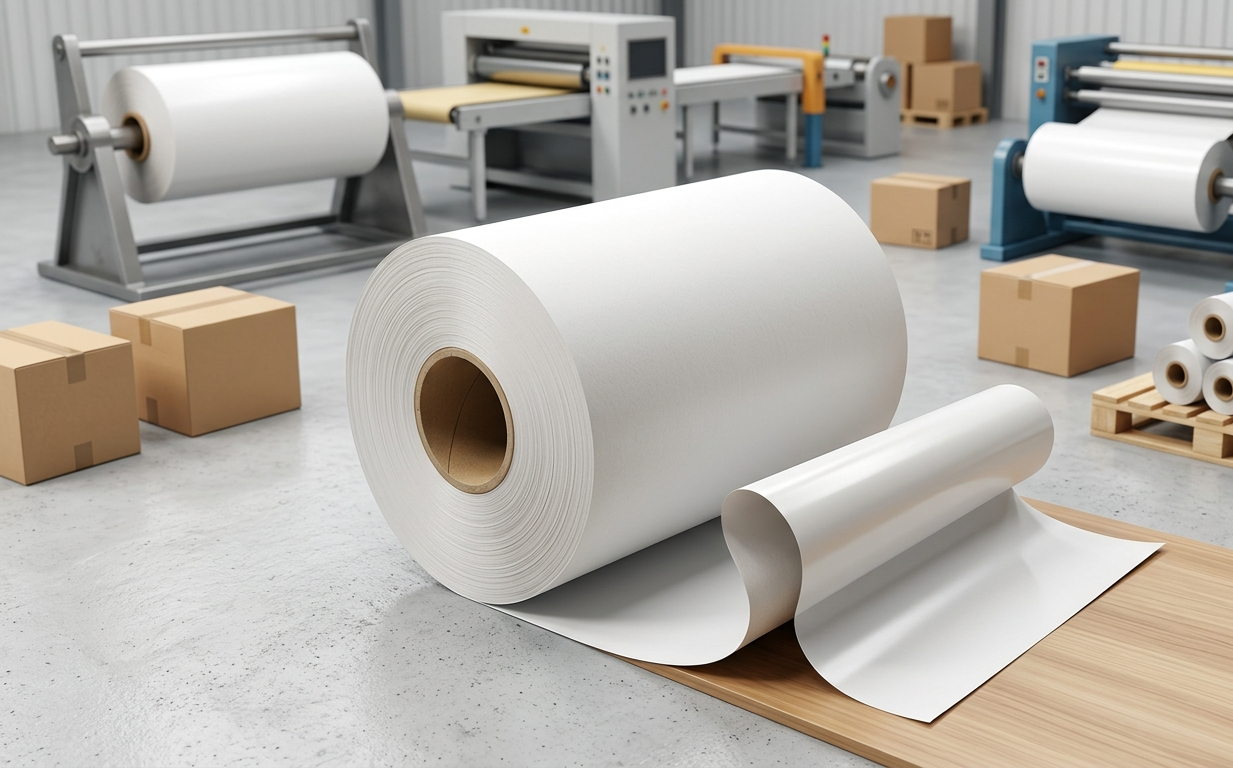
A release liner is a paper or film backing coated with a release agent — almost always silicone — that lets an adhesive sit against it and then peel away cleanly. Its job is to protect the adhesive during storage and handling, then let go at a controlled, predictable force when the product is applied.
You will see the terms release liner, release paper, and silicone release paper used loosely. There is a real distinction. Release paper can be coated with simpler agents like wax or polyethylene for light-duty separation. Silicone release liners use a cured silicone coating, which gives better heat resistance, cleaner release, and far more consistent performance in industrial converting. For most label and tape work, silicone is the standard.
Paper Substrates: Glassine, SCK, CCK, PCK
The substrate is the base paper under the silicone, and it sets the smoothness, strength, and how the liner behaves on a high-speed line. These are the four you will be quoted most often.
| Substrate | What It Is | Strengths | Typical Use |
| Glassine | Dense, smooth, supercalendered paper | Very smooth surface, lay-flat, clean release | Labels, graphic arts, medical |
| SCK (supercalendered kraft) | Calendered kraft for a tight, smooth surface | Strong, narrow caliper tolerance, good for die-cutting | Label stock, tape |
| CCK (clay-coated kraft) | Kraft with a clay coat under the silicone | Smooth coating base, durable, dimensionally stable | Tapes, industrial, composites |
| PCK (poly-coated kraft) | Kraft with a polyethylene layer | Moisture resistance, tougher liner | Demanding or wet environments |
Film liners (PET, PP, PE, BOPP) are the alternative when you need extreme clarity, dimensional stability, or very thin gauge. Paper liners win on cost, printability, and the firm hand that makes die-cutting and kiss-cutting predictable.
Silicone, Release Force, and Differential Release
The silicone coating is where release performance is won or lost. Three variables matter most.
Release Force
This is how hard the adhesive has to pull to separate from the liner, usually measured in grams per inch. Too high and your applicator struggles or labels tear. Too low and labels pre-release on the roll. The right number depends on your adhesive and how the product is applied — by hand or by high-speed machine.
Single-Side vs. Double-Side Coating
A single-side liner carries adhesive on one face. A double-side coated liner releases on both faces, which you need for transfer tapes and unsupported adhesive films.
Differential Release
This is a double-side liner with intentionally different release force on each side — an easy side and a tight side. It controls the unwind sequence in transfer tapes and multilayer constructions so the adhesive ends up where you want it. If you are running a transfer-tape or double-coated construction, differential release is usually the spec that makes or breaks the run.
GSM and Caliper: Matching the Liner to the Line
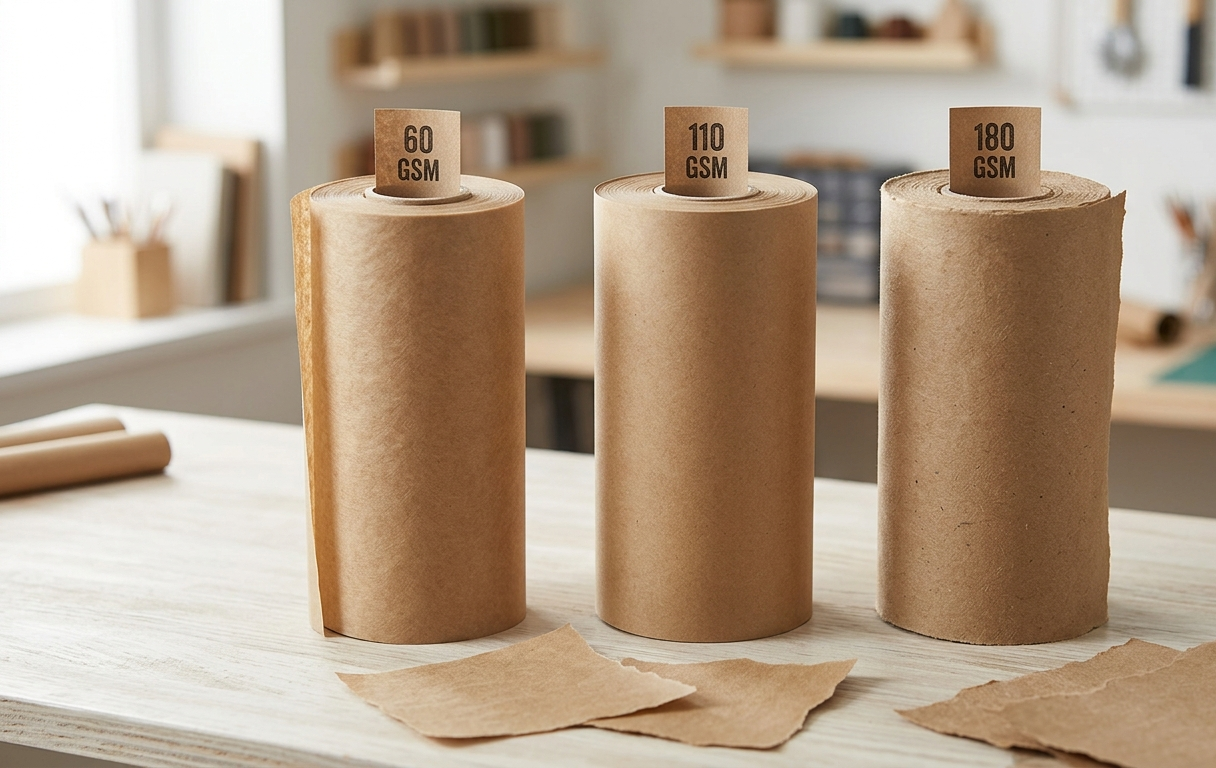
Paper release liners commonly run from roughly 35 to 160 GSM. Lighter liners suit thin face stocks and tight rolls. Heavier liners give the stiffness needed for clean die-cutting and matrix stripping.
Caliper — the thickness — matters as much as weight. Die-cutting and kiss-cutting demand narrow caliper tolerance so the cut depth stays consistent across the web. A liner that varies in thickness produces inconsistent cuts and lost yield. This is the spec where cheap liners quietly cost you money on the converting floor.
Where Release Liners Are Used
The application drives every spec decision, so match the liner to the job.
- Labels and stickers — The largest use. Glassine or SCK with a tuned release force for the applicator.
- Tapes and transfer tapes — Double-side or differential release, often on CCK or SCK.
- Medical and hygiene — Clean, consistent release for wound care and device assembly, frequently glassine.
- Composites and industrial — Tougher liners that survive layup and processing.
- Building and roofing — Self-adhesive membranes that need a liner able to rewind after production.
The Specs to Confirm Before You Order
Hand your supplier this list and you will avoid most release-liner problems.
- Substrate — Glassine, SCK, CCK, PCK, or film, based on smoothness and strength needs.
- Coating sides — Single-side, double-side, or differential release.
- Target release force — Give the value or describe the adhesive and application speed so it can be tuned.
- GSM and caliper — Match to your face stock and your die-cutting tolerance.
- Width and roll size — Confirm slitting width and core size for your line.
- Printability — If the liner gets printed for branding or instructions, confirm the surface accepts your ink.
Frequently Asked Questions
What is the difference between release paper and a release liner?
A release liner is the broader term for any backing coated to release an adhesive. Release paper often refers specifically to paper-based liners. Silicone release liners use a cured silicone coating for cleaner, more heat-resistant release than wax or polyethylene.
Which substrate is best — glassine or SCK?
Glassine is prized for a very smooth surface and lay-flat behavior, common in labels and medical applications. SCK is stronger with tight caliper control, which helps in die-cutting and tape. The best choice depends on whether you prioritize surface smoothness or strength.
What GSM should a release liner be?
Paper liners typically range from about 35 to 160 GSM. Lighter for thin labels and tight rolls, heavier for clean die-cutting and stiffer handling.
What is differential release and when do I need it?
Differential release means each side of a double-coated liner releases at a different force. You need it for transfer tapes and multilayer adhesive constructions where the unwind order has to be controlled.
Can release liners be printed?
Yes. Many paper liners accept printing for branding, batch codes, or application instructions. Confirm the coated surface suits your ink system.