Ir al contenido
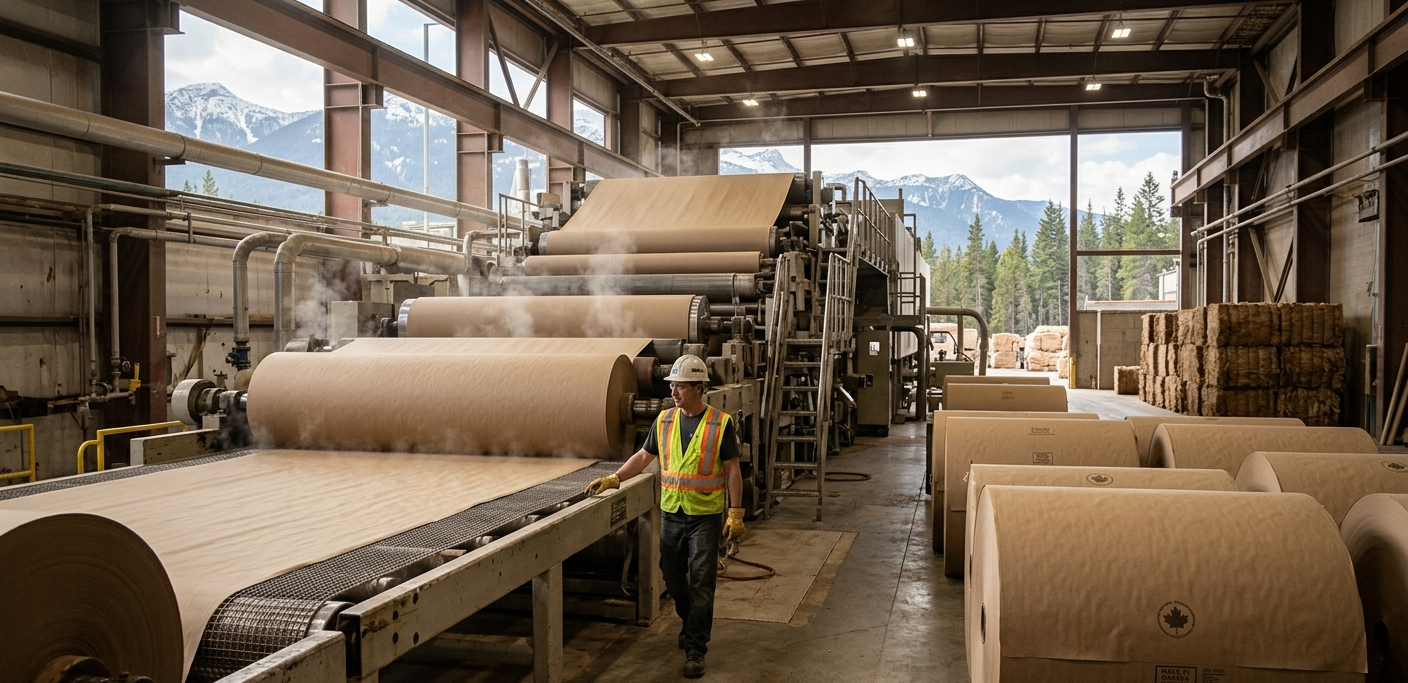
If you are sourcing packaging paper for your brand and a supplier tells you their product is ‘recycled’ or ‘made with recycled content,’ that statement alone tells you almost nothing. Recycled content claims in paper span an enormous range — from 100% post-consumer waste recovery to a few percent of manufacturing floor trim that never left the factory. The difference matters enormously for your brand’s sustainability credentials, your ESG reporting accuracy, and your compliance with retailer sustainability procurement requirements.
This post explains exactly what 100% post-consumer recycled (PCR) paper means, how it is measured and documented, and how it differs from the looser ‘recycled content’ claims you will encounter from most suppliers.
The Three Types of ‘Recycled’ Paper — They Are Not Equal
1. Pre-Consumer Recycled Content
Pre-consumer recycled content refers to paper waste generated during the manufacturing process — trimmings from paper rolls, off-spec production runs, edge waste, and broke (paper web breaks on the machine that is collected and re-pulped). This material never reached a consumer. It is recycled in the efficiency sense — waste within the production facility is captured rather than landfilled — but it does not represent material recovered from the waste stream.
Pre-consumer recycled content is easy to achieve at nearly any percentage because it comes from the manufacturer’s own production waste. It has minimal environmental significance beyond basic manufacturing efficiency.
2. Post-Industrial Recycled Content
Post-industrial recycled content is waste paper generated by industrial processes outside the paper mill — trimmings from paper converting operations (envelope making, box manufacturing, label printing), rejected goods from printing operations, and industrial paper waste from manufacturing facilities. This material has left the paper mill but has not reached a consumer.
Post-industrial recycled content is more significant than pre-consumer content (it represents material recovery from external industrial waste streams) but does not address consumer waste recovery.
3. Post-Consumer Recycled (PCR) Content — The Meaningful Standard
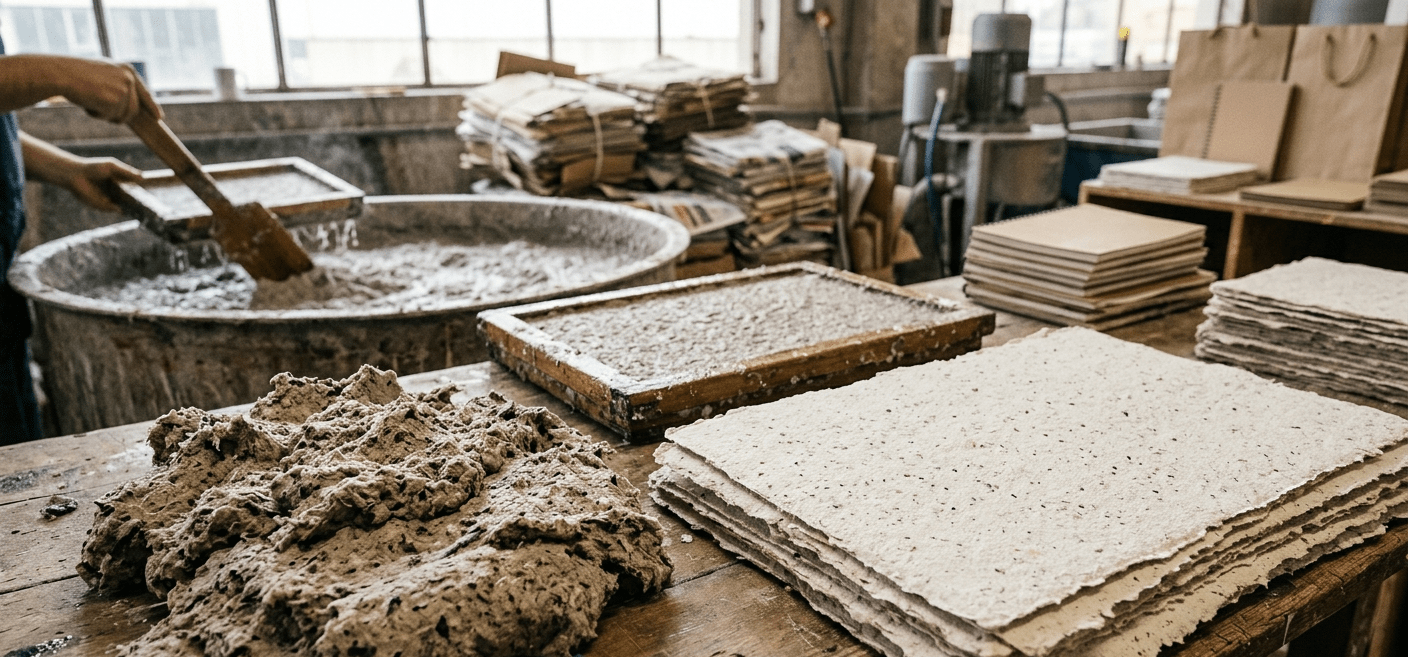
Post-consumer recycled content is paper that has been used by a consumer, business, or organization in its intended purpose, discarded, collected through a recycling program, and processed back into new paper fiber. This is the only recycled content category that directly addresses consumer waste recovery — paper that would have gone to a landfill or incinerator is instead recovered and manufactured into new products.
100% PCR means all fiber in the paper comes from this post-consumer recovered source. This is the strongest possible recycled content claim and the only specification that fully addresses circular economy criteria for paper packaging.
How PCR Paper Content Is Measured and Documented
For a recycled content claim to be credible in sustainability reporting, it must be documented through a verifiable chain of custody — not just stated on a product data sheet.
The primary documentation standards for recycled paper content are:
- FSC Recycled certification: Forest Stewardship Council’s recycled content track verifies that 100% of wood fiber inputs are from reclaimed sources (post-consumer or pre-consumer). FSC chain-of-custody certification provides an independent audit trail from recovered fiber source through production to finished product.
- ISO 14021 self-declaration: International standard for environmental claims. Under ISO 14021, recycled content claims must specify the percentage and the source category (pre-consumer or post-consumer). Vague ‘recycled’ claims without source distinction do not meet ISO 14021 requirements.
- Supplier documentation: At minimum, a supplier-issued recycled content certificate that specifies: total recycled content percentage, post-consumer content percentage, and the basis for the claim (input weighing records, supplier certificates for recovered fiber). This is the documentation needed for ESG reporting and retailer supply chain questionnaires.
Physical Properties of 100% PCR Paper — What to Expect
Understanding the property differences between virgin fiber paper and 100% PCR paper helps you specify correctly and avoid disappointment when the product arrives.
Color
100% PCR paper is naturally brown to warm gray — the mixed colors of recovered paper streams produce a non-uniform fiber color that cannot be removed without bleaching. If you are using recycled paper for sustainable brand packaging, this natural color is actually an asset — it is visually recognized by consumers as the signal of recycled and eco-friendly packaging.
Strength
Recycled fibers are shorter and weaker than virgin fibers due to previous manufacturing processing. At equivalent gsm, 100% PCR paper has approximately 20–30% lower tensile and tear strength than virgin kraft paper. This is compensated by using a higher gsm recycled grade: 80gsm PCR paper typically delivers equivalent strength to 60gsm virgin kraft for standard packaging applications.
Surface and Printability
PCR paper has a more textured, irregular surface than calendered virgin fiber paper. It is printable with water-based and soy-based inks but is not suitable for high-resolution fine-print applications. For brand packaging with logos and simple messaging, PCR paper prints excellently with the right ink system — and the natural texture enhances the eco-aesthetic.
Recyclability
100% PCR paper is fully recyclable — it can be collected, processed, and recycled again into new paper fiber. This closed-loop recyclability is a core advantage over plastic packaging alternatives and is a documentable property for circular economy reporting.
How to Use PCR Paper Claims in Your Brand and ESG Reporting
For consumer-facing claims (on packaging, website, social media):
- Correct claim: Made from 100% post-consumer recycled paper — certified recycled content.
- Incorrect claim (too vague): Eco-friendly packaging / Green packaging / Sustainable paper (without specification).
- Incorrect claim (potentially misleading): 100% recycled paper (without specifying post-consumer — could include pre-consumer).
For ESG reporting and retailer questionnaires:
Most major retailer sustainability questionnaires (Walmart Project Gigaton, CDP Supply Chain, EcoVadis) request packaging material recycled content by percentage and type. The documentation needed is: FSC Recycled certificate or ISO 14021-compliant self-declaration, supplier recycled content certificate specifying PCR percentage, and batch-level traceability records linking your packaging paper rolls to the certified recycled fiber inputs.
Frequently Asked Questions
Can I claim ‘100% recycled packaging’ if my paper has 30% pre-consumer content?
No — if 30% of the fiber is pre-consumer content and 70% is PCR, you can claim ‘70% post-consumer recycled content’ but not ‘100% recycled packaging.’ Claiming 100% when you have less is a greenwashing risk and may violate FTC Green Guides in the US.
Is FSC Recycled certification necessary for recycled content claims?
FSC certification is not legally mandatory for recycled content claims in most jurisdictions, but it is increasingly required by major retailers and ESG reporting frameworks as the audit trail standard. For B2C claims on consumer packaging, ISO 14021-compliant supplier declarations may be sufficient for many markets.
Does recycled paper packaging have a higher carbon footprint than virgin paper?
At the production stage, recycled fiber paper typically has a lower carbon footprint than virgin fiber paper (no forestry, no chemical pulping energy). However, transportation and collection of recovered paper has its own emissions. Life-cycle analysis (LCA) studies consistently show that paper with high PCR content has 20–40% lower life-cycle carbon footprint than equivalent virgin fiber paper.
Can 100% PCR paper be composted as well as recycled?
Yes — 100% PCR paper without coatings or synthetic additives is both recyclable (standard paper recycling stream) and compostable (industrial composting per EN 13432, and home composting over a longer time period). These properties can both be claimed and documented for packaging sustainability labeling.