Zum Inhalt springen
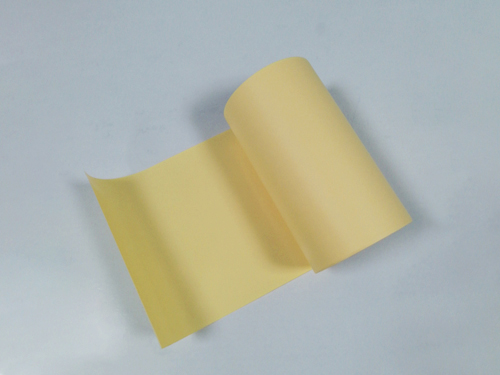
 Kangchuang Paper’s PCB board separator paper is a precision-cut sulfur-free, acid-free interleaving sheet manufactured specifically for stacking and shipping bare printed circuit boards (PCBs) and populated PCB assemblies (PCBAs). With sulfur content below 5ppm and pH maintained at 7.0–8.5, our separator sheets protect solder mask surfaces, copper traces, gold-plated edge connectors, and component finishes from the hydrogen sulfide tarnish, ionic contamination, and acid degradation that standard paper packaging causes during extended storage and ocean freight. Available in standard IPC-compliant sheet dimensions and any custom size up to 1,200×1,200mm, in paper weights from 50gsm to 120gsm, supplied in pre-cut stacks or roll format — factory-direct from Dongguan with free samples shipped via DHL Express to circuit board manufacturers, EMS companies, and PCB distributors in the United States.
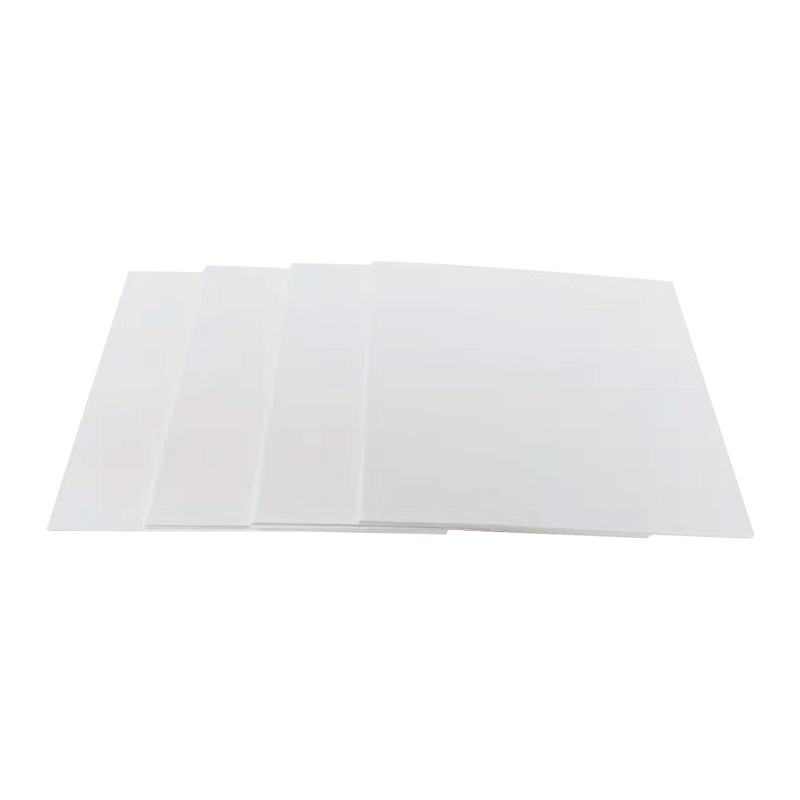
Printed circuit boards — both bare boards (no components) and assembled PCBAs — are among the most chemically sensitive items in electronics manufacturing. Their surfaces contain multiple reactive materials in close proximity: copper traces and pads (reactive to oxidation and sulfide tarnish), tin-lead or lead-free solder alloys (reactive to ionic contamination), gold-plated connector fingers (sensitive to surface chemistry), solder mask epoxy (absorbs ionic contaminants), and flux residues from wave or reflow soldering (hygroscopic and chemically active).
When standard paper is used as a separator between stacked PCBs, three contamination mechanisms occur simultaneously. First, hydrogen sulfide from paper sulfur compounds tarnishes exposed copper pads, edge connector fingers, and test points, reducing solderability and electrical contact integrity. Second, organic acids from acidic paper (acetic acid, formic acid) migrate to PCB surfaces, increasing ionic contamination levels and causing potential corrosion failures in high-humidity environments. Third, paper fibers from rough-surfaced paper physically contaminate PCB pads, causing soldering defects when components are placed on contaminated surfaces.
PCB manufacturers and EMS companies using non-compliant packaging paper encounter these problems as downstream yield loss — often not discovered until incoming board inspection or first-pass soldering yield data reveals a contamination issue. Retroactive cleaning of contaminated boards adds cost, reduces throughput, and risks damaging delicate components and surface finishes.
Bare PCB Separator (Unpopulated Boards): Bare boards are most sensitive to surface chemistry changes on landing pads. The primary concern is solderability preservation — copper and ENIG (Electroless Nickel Immersion Gold) pad surfaces must remain free of sulfide and oxide contamination to achieve reliable solder wetting during SMT assembly. Our 60–80gsm sulfur-free separator paper provides appropriate protection for bare board storage and shipment periods of up to 12 months.
PCBA Separator (Populated Assemblies): Assembled PCBAs with SMD components soldered in place require separator paper that avoids contact with component bodies while providing surface protection. Our 50–60gsm lighter-weight grades are preferred for PCBA interleaving — thin enough to avoid pressure on component bodies while maintaining the anti-contamination properties. For boards with tall through-hole components, custom-thickness foam-laminated separator combinations are available on request.
We pre-cut PCB separator sheets to the following standard panel sizes used by Gerber-based PCB fabricators and EMS companies. Custom sizes are available with 5-day lead time on tooling setup:
460×610mm (18×24 inch equivalent) — Standard North American panel format
305×457mm (12×18 inch) — Common medium-panel format
250×350mm — Small panel format for consumer electronics
Custom — Any dimension up to 1,200×1,200mm, cutting tolerance ±2mm
| TECHNISCHE DATEN | DETAILS |
| Sulfur Content | <5ppm — XRF analysis per production batch |
| pH-Wert | 7.0–8.5 (acid-free, alkaline reserve) |
| Available GSM Grades | 50gsm | 60gsm | 80gsm | 100gsm | 120gsm |
| Sheet Format Dimensions | Custom cut to any size up to 1,200×1,200mm | Cutting tolerance ±2mm |
| Standard Sheet Sizes | 460×610mm | 305×457mm | 250×350mm | A4 | A3 | Custom |
| Roll Width (for roll format) | 200mm to 1,200mm — any width to machine specification |
| Oberfläche | Smooth calendered — low lint, low fiber generation |
| Farbe | White (bleached) standard | Natural cream on request |
| Caliper Uniformity | ±5% of specified gsm across sheet area |
| Core Diameter (roll) | 3-inch (76mm) standard | 6-inch (152mm) on request |
| Feuchtigkeitsgehalt | 5–8% at 23°C / 50% RH |
| Particle Generation | Low — compatible with ISO 7 (Class 10,000) clean room handling |
| Mindestbestellmenge | 1 ream (200 sheets) for sample evaluation | 500kg for production |
| Lieferzeit | 5–7 days (samples/standard sizes) | 7–12 days (custom cut) |
| Versand | DHL Express (Muster aus den USA – kostenlos) | FOB Dongguan (Produktion) |
| Dokumentation | Sulfur test report | pH certificate | Batch traceability |
PCB board separator paper is a specialty paper sheet placed between stacked circuit boards during packaging, storage, and shipment to prevent board-to-board contact damage and to protect PCB surfaces from chemical contamination. It is needed because stacked bare PCBs in direct contact scratch solder mask surfaces, damage gold edge connector fingers, and transfer ionic contamination between board surfaces. Separator paper also prevents the rubbing that generates conductive copper dust from board edges — a contamination risk for adjacent boards in a stack.
PCB surfaces — particularly gold-plated ENIG pads, bare copper pads, and exposed solder alloy surfaces — react with hydrogen sulfide gas emitted by sulfur-containing paper. The resulting metal sulfide contamination degrades pad solderability (solder refuses to wet tarnished copper or gold surfaces), fails ionic contamination tests (ROSE, SIR), and can cause visible tarnish that fails board incoming inspection. Standard paper, kraft, and corrugated board all contain sulfur levels that produce detectable H₂S contamination of adjacent metal surfaces within days to weeks.
Bare board separators (for unpopulated PCBs) primarily need to protect landing pad solderability. Paper weight of 60–80gsm provides good support and surface protection without excessive bulk in the board stack. PCBA separators (for assembled boards with components) need a thinner, softer sheet that avoids exerting pressure on component bodies — especially capacitors, connectors, and tall leaded components. For PCBAs, we recommend 50–60gsm grades. For boards with very tall through-hole components, please discuss your stack configuration with us — we may recommend custom foam-backed separator combinations.
Yes — custom sheet cutting is a standard service, not an add-on. Specify your required sheet dimensions (length × width in mm) and we cut to that specification with ±2mm tolerance. Standard PCB panel sizes (460×610mm, 305×457mm, 250×350mm) are maintained as regular production items. Custom sizes up to 1,200×1,200mm are available with 7–12 day lead time for first production run.
For bare PCBs up to 1.6mm board thickness: 60–80gsm provides good surface protection and caliper support. For thin PCBs (below 1.0mm): 50–60gsm is preferred to avoid excessive stacking height and to provide a softer surface contact. For heavy multilayer PCBs (above 2.4mm): 80–100gsm gives better stiffness to prevent separator sheet sagging between board edges in the stack. If you are unsure, request sample sheets of two grades and test both in your actual packaging configuration.
Sample evaluation orders for PCB separator paper: minimum 1 ream (200 sheets) at your specified sheet dimensions. Sample shipments are dispatched free via DHL Express to US addresses within 5–7 business days of specification confirmation. No minimum weight for sample orders.
Stacking limits depend on board thickness, board weight, and packaging carton rigidity. As a general guide: for 1.6mm bare boards, a stack of 10–15 boards with separator between each board is typical for standard export carton packaging. For thinner boards, stacking limits may be lower due to warpage risk from cumulative stack weight. For boards with large panel dimensions (above 400×400mm), we recommend maximum 8 boards per stack to limit pressure on boards at the bottom. Consult our PCB Packaging Guide (download above) for detailed stacking recommendations by board type.
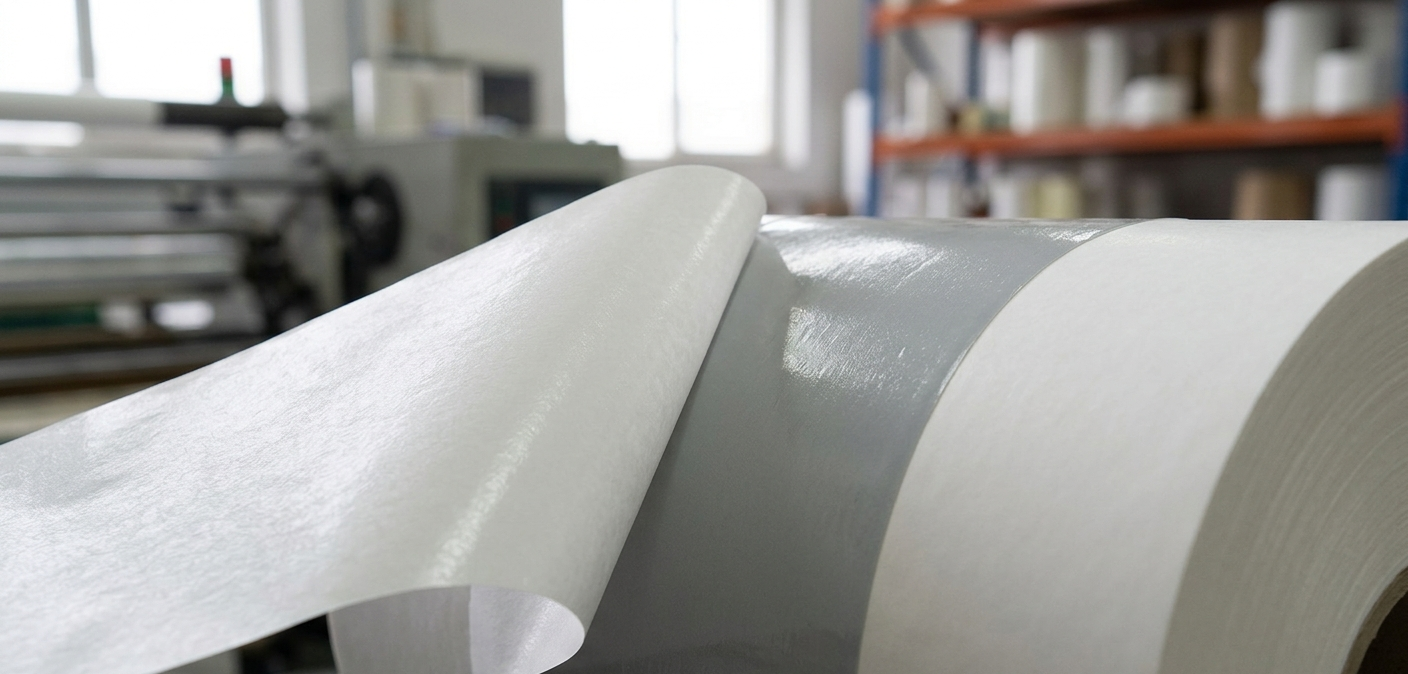
Yes. For automated board packaging lines that feed separator paper from a roll (common in high-volume PCB fabrication shops), we supply separator paper in roll format to your machine width specification. Standard machine widths of 300mm, 400mm, 500mm, and 600mm are available from stock. Custom widths are available with 7–10 day lead time. Please specify your machine’s core diameter requirement (3-inch or 6-inch) and maximum roll OD when ordering roll format.
Our standard PCB separator paper is not antistatic — it is a base-grade sulfur-free sheet without surface resistance treatment. For applications requiring both sulfur-free AND electrostatic dissipative properties, see our White Antistatic Sulfur-Free Paper, which provides <5ppm sulfur content combined with surface resistance of 10⁷–10¹⁰ Ω/sq for ESD-sensitive PCB handling environments.
PCB separator paper stored properly (15–30°C, 30–65% RH, in original packaging away from chemical storage) maintains its specification for 24 months from production date. The sulfur-free chemistry does not degrade under proper storage conditions — the main risks are moisture absorption (which can cause the paper to become wavy and produce uneven contact with board surfaces) and contamination from nearby sulfur-containing materials. Always store in original polyethylene wrapping until use.
Yes. Sulfur content test report and pH measurement certificate are standard with every PCB separator paper production shipment. Test reports document: batch number, production date, sulfur content result (in ppm), pH result, and specification compliance statement. For customers requiring third-party laboratory verification, independent testing can be arranged — please request this at order placement as it adds 3–5 days to lead time.
Yes. We ship PCB separator paper to PCB fabricators, EMS companies, electronics distributors, and contract packagers throughout the United States. Sample reams ship via DHL Express (3–5 business days) at no cost. Production orders ship FOB Dongguan by sea freight with full export documentation. Contact us with your sheet dimensions, gsm, quantity, and US delivery location for a complete delivered cost quotation.
Kangchuang Paper ist auf hochwertige Industriepapiere spezialisiert – schwefelfreie, beschichtete, Trenn- und Rostschutzpapiere. Teilen Sie uns Ihre Anforderungen mit, und wir empfehlen Ihnen umgehend die passende Sorte.