Zum Inhalt springen

GSM (grams per square metre) is the primary specification parameter for industrial packaging paper, but choosing the right GSM is not as simple as picking a number — it depends on the application, the fill weight, the required burst and tensile strength, the converting process, and the service environment. This guide maps 14 industrial packaging applications to their recommended GSM paper ranges and the key performance properties that drive the selection.
GSM Application Guide: 14 Industrial Packaging Uses
The table below maps common industrial packaging applications to recommended GSM ranges, material types, and the key performance requirement that drives the specification.
| Application | Recommended GSM | Material Type | Key Performance Requirement |
|---|---|---|---|
| Tissue wrapping (delicate items) | 17–25 gsm | Bleached or unbleached tissue | Soft hand feel, no abrasion, low bulk |
| Interleaving (glass, steel, LED) | 30–60 gsm | Sulfur-free kraft or tissue | Chemical neutrality, surface protection |
| Crinkle void fill (e-commerce) | 40–70 gsm | Recycled kraft | Cushioning, good resilience when crinkled |
| Light wrapping and packing paper | 50–80 gsm | Natural kraft | Wrapping integrity, tear resistance |
| Single-ply retail bags | 60–90 gsm | Sack kraft (virgin or recycled) | Burst strength, handle attachment strength |
| Multi-wall bag plies (light fill) | 70–90 gsm per ply | Virgin sack kraft | Burst ≥ 200 kPa, extensibility |
| Heavy-duty single-wall bags | 90–120 gsm | Virgin kraft | Burst ≥ 350 kPa, high tensile strength |
| Multi-wall industrial sacks | 80–100 gsm per ply | Virgin extensible sack kraft | Extensibility ≥ 8% MD, drop impact resistance |
| Paper carrier bags (retail) | 100–150 gsm | White kraft or coated kraft | Stiffness, print quality, handle strength |
| Corrugated liner (inner face) | 125–180 gsm | Kraft liner (virgin or recycled) | Ring crush, flat crush, moisture resistance |
| Corrugated medium (fluting) | 80–130 gsm | Semi-chem medium or recycled | CMT (Concora Medium Test) strength |
| Heavy corrugated liner (outer) | 180–250 gsm | Premium kraft liner | Burst, BCT (Box Compression Test) |
| Release liner base paper | 60–120 gsm | SCK (super calendered kraft) | Surface smoothness, silicone anchorage |
| VCI protective wrapping | 40–80 gsm | VCI-impregnated kraft | Corrosion inhibitor emission rate, coverage |
What GSM Is and How It Is Measured
GSM (grams per square metre), also written g/m², is the universally recognised metric measure of paper and board weight. It is measured by cutting a standardised test piece (most commonly 100 mm × 100 mm = 0.01 m²) from the paper, weighing it to the nearest 0.001 gram on a calibrated analytical balance, and multiplying by 100 to get the mass per square metre. The measurement is typically taken at multiple points across the roll width and along the roll length, and the result is reported as the average with a stated ± tolerance (typically ±3–5% for kraft paper).
GSM is a mass measurement, not a thickness measurement. Two papers of identical GSM can have different thicknesses (and therefore different caliper) depending on how densely the fibres are packed. A highly calendered (rolled) kraft paper is denser and thinner than an uncalendered paper at the same GSM. Caliper is expressed in µm (micrometres) or mm and is measured using a calibrated micrometer at defined contact pressure (typically 100 kPa for paper). Specifying both GSM and caliper — or GSM and density — gives more complete definition of the paper structure than GSM alone.
For technical specifications, GSM should always be combined with key mechanical property callouts. The most important are: tensile strength MD and CD (kN/m, per ISO 1924-2), burst strength (kPa Mullen or hydraulic, per ISO 2759), elongation at break MD (%, per ISO 1924-2), and Cobb water absorption (g/m² at 60 seconds, per ISO 535). These four properties define the functional performance of the paper far more precisely than GSM alone.
- GSM is measured per ISO 536: cut 0.01 m² test piece, weigh, multiply by 100
- Typical GSM tolerance on kraft paper: ±3–5% of nominal (so 90 gsm ±4.5 gsm in production)
- GSM is mass per unit area — not thickness. Specify caliper separately if thickness matters for your converting process
- Always combine GSM with key property callouts: tensile, burst, elongation, Cobb water absorption
Understanding the Paper Grammage Range: From 17 gsm to 440 gsm
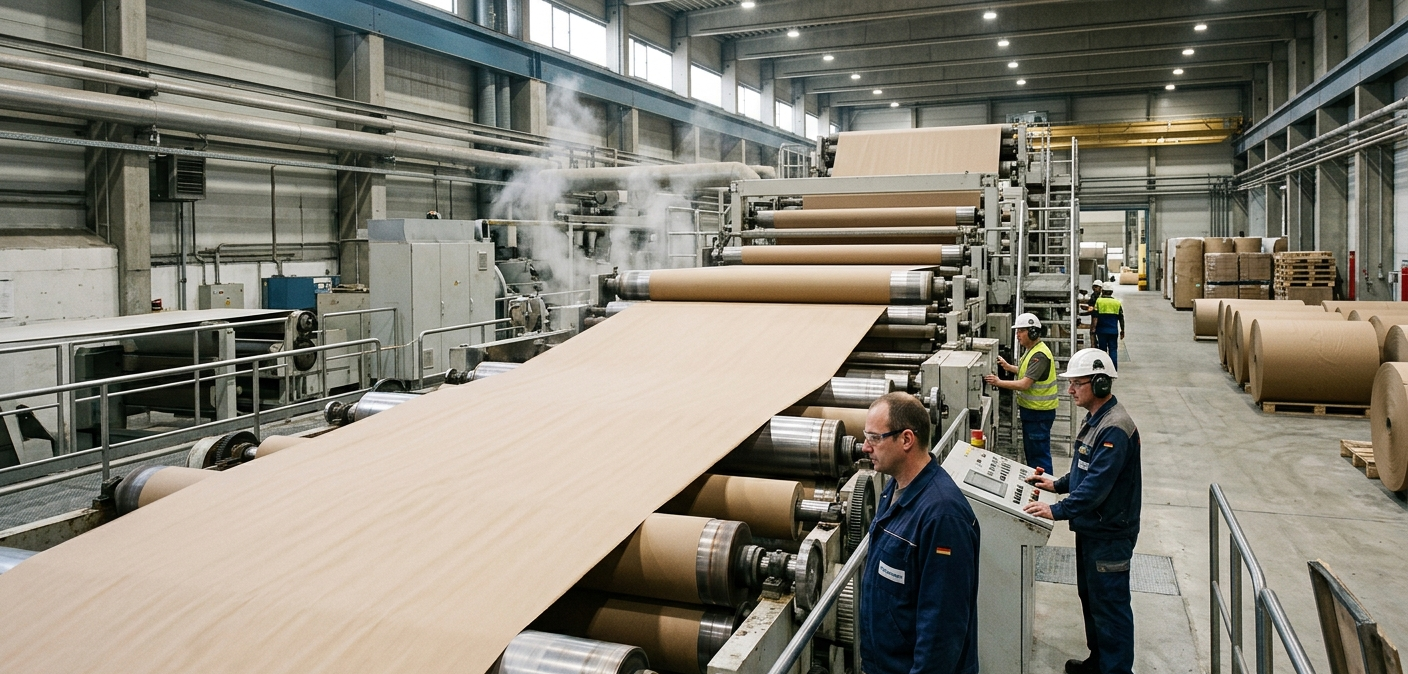
Industrial paper products span an enormous GSM range. At the low end, tissue paper (17–25 gsm) is the thinnest commercially produced paper, with individual fibres nearly visible to the naked eye. At the high end, heavyweight kraft liner board (350–440 gsm) is thick enough to be classified as paperboard rather than paper. The industrial packaging range — 30–200 gsm — covers the vast majority of bag, wrapping, interleaving, and specialty paper applications.
Within this range, the GSM selection is primarily driven by the mechanical load the paper must carry. Wrapping paper used only to protect a surface from scratching during transit needs only 30–50 gsm — the paper needs to be clean, smooth, and non-abrasive, not structurally strong. Paper used as the outer ply of a 50 kg cement bag must withstand internal bag pressure during filling, drop impact during handling, and stack compression during palletised storage — this application demands 90–100 gsm virgin extensible sack kraft with burst strength above 400 kPa and elongation above 10% MD.
Tissue and Light Interleaving Paper: 17–60 gsm
Tissue paper (17–25 gsm) is produced on tissue machines that create a crinkled, soft surface by creping the paper against a Yankee dryer. The result is a low-density, high-bulk paper with a soft texture. In packaging, tissue is used for delicate product wrapping in premium retail, cosmetics, and fashion, where the customer perceives the tissue wrapping as part of the brand experience. Tissue should be specified for applications where softness, no abrasion, and visual appeal are the primary requirements — not where structural strength matters.
Interleaving paper (30–60 gsm) is a different application — here the functional requirement is chemical neutrality and surface protection, not softness. Glass interleaving paper must be free of surface particles that could scratch polished glass surfaces. Electronics interleaving paper must have sulfur content below 50 ppm to avoid tarnishing silver contacts and PCB traces. LED and solar cell interleaving must meet defined silicone contamination limits. These are technical performance specifications that the paper supplier must verify by laboratory testing on each production lot. Kangchuang Papers provides sulfur-free interleaving paper with lot test reports confirming sulfur content and surface particle analysis. See Kangchuang Papers’s full product range for available interleaving grades.
Standard Wrapping and Light Bag Paper: 50–90 gsm
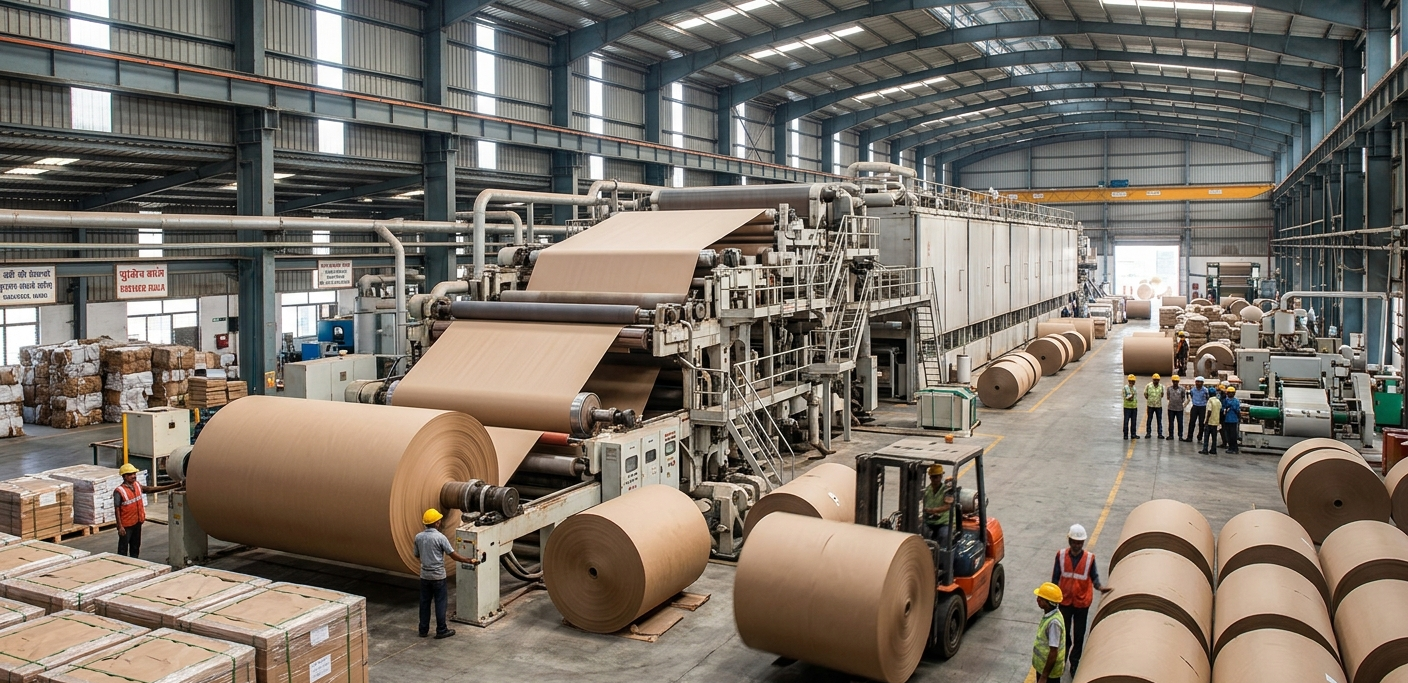
The 50–90 gsm range covers the largest volume segment of the industrial kraft paper market: wrapping paper for hardware and industrial goods, single-ply retail bags for bakery and grocery, and the inner plies of multi-wall bags for food and agricultural products. At 60–70 gsm, virgin kraft paper provides adequate tensile strength for single-ply retail bags with fills up to 5 kg. At 80–90 gsm, the burst strength (typically 220–320 kPa for virgin kraft at this weight) is sufficient for single-ply bags with fills to 10 kg and for the outer ply of multi-wall bags with lighter fills.
The choice between virgin and recycled kraft in this range depends on the fill weight and drop requirement. Recycled kraft at 80 gsm achieves burst strength of approximately 150–220 kPa — adequate for light-fill bags (up to 5 kg) but insufficient for medium fills. Virgin kraft at the same GSM achieves 250–320 kPa, comfortably handling fills to 10 kg. If the application requires medium fill weight with cost-sensitive material, a high-quality recycled kraft at 90–100 gsm can approach the performance of virgin kraft at 80 gsm, though elongation at break remains lower with recycled fibre.
Heavy-Duty Industrial Sack Paper: 90–120 gsm
Above 90 gsm, kraft paper enters the heavy-duty industrial sack range: materials for cement bags, chemical powder bags, agricultural bulk bags, and mineral product sacks that must withstand fills of 20–50 kg and drop tests from 1.2 metres onto concrete. At this performance level, virgin extensible sack kraft is essentially the only option. Extensible kraft is manufactured by compressing the paper in the machine direction during production, creating a crinkled microstructure that allows controlled elongation at break of 8–14% MD. This elongation absorbs the kinetic energy of a drop impact progressively, preventing catastrophic burst failure.
Kangchuang Papers produces virgin sack kraft from 70 to 150 gsm with lot test reports confirming tensile, burst, elongation, and Cobb water absorption on every production lot. MOQ 500 kg for standard grades; custom GSM specifications from 3 tonne run minimum. Visit kangchuangpapers.com to request grade specifications and a sample roll for technical evaluation.
Release Liner and Specialty Base Papers: 60–120 gsm
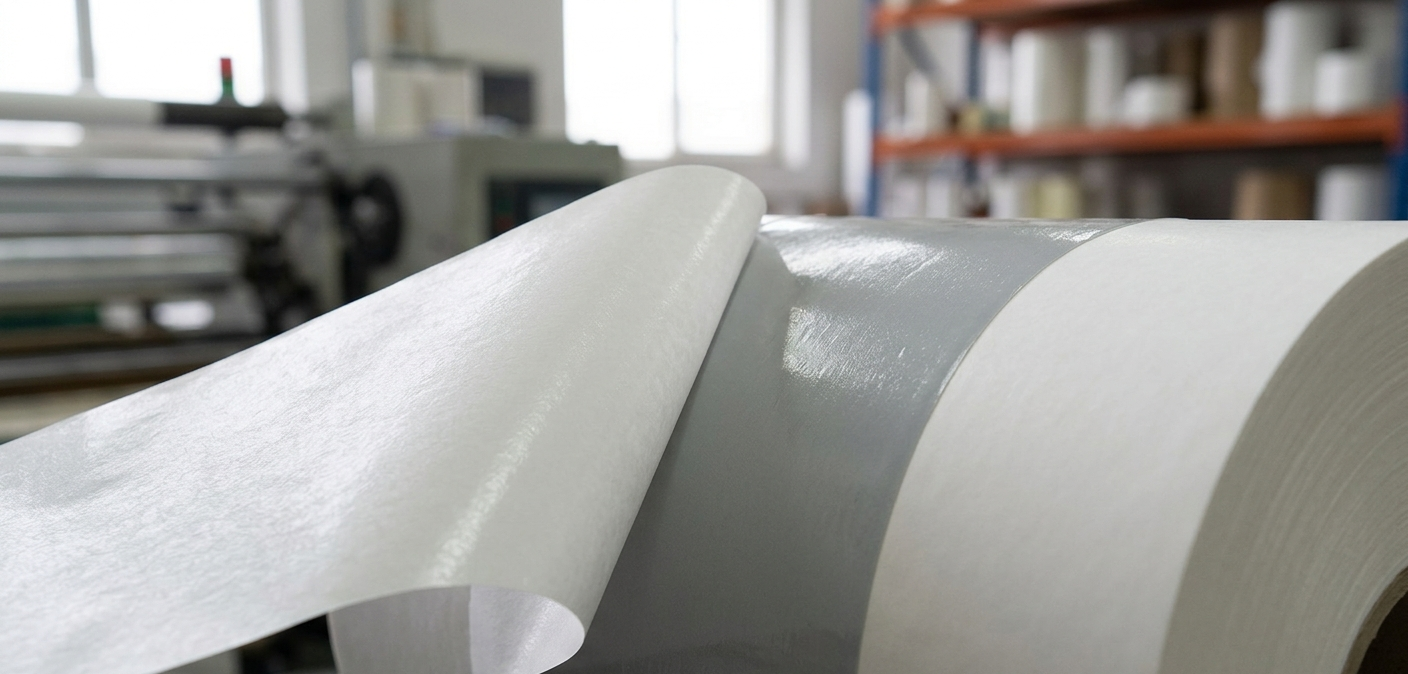
Release liner base paper (also called SCK — super calendered kraft) is a highly smoothed kraft paper that serves as the carrier for silicone coating in pressure-sensitive label and tape applications. The silicone is applied to the super calendered surface, cured, and then a pressure-sensitive adhesive is laminated against the silicone release surface. When the label or tape is applied by the end user, the release liner is stripped away. The key performance requirements for release liner base paper are: extremely smooth surface (Ra ≤ 1.0 µm, measured by profilometry), consistent caliper (very low caliper variation for winding and converting), and adequate silicone anchorage (the silicone coating must adhere to the paper surface strongly enough that it stays with the liner when the adhesive is stripped away, not with the tape).
VCI (Vapour Corrosion Inhibitor) kraft paper is impregnated with a volatile corrosion inhibitor compound that vaporises slowly at ambient temperature, filling the enclosed space around a metal part with a corrosion-inhibiting atmosphere. VCI kraft is used for wrapping machined metal parts, tools, and instruments during shipping and storage. The key specification for VCI kraft is the inhibitor emission rate (typically measured as mg inhibitor per square metre of paper) and the coverage area (how much metal surface area one square metre of VCI paper will protect at the specified storage duration).
Corrugated Liner Board: 125–250 gsm
Corrugated liner board (the outer and inner facing sheets of corrugated boxes) is at the upper end of the paper weight range, technically classified as paperboard rather than paper above approximately 200 gsm. The primary structural property for corrugated liner is Ring Crush Resistance (RCT, measured in kN/m per ISO 12192), which governs how much vertical compressive load the corrugated box can sustain in a stacking configuration. Higher GSM liner generally provides higher RCT, but the correlation is not linear — liner produced from long-fibre virgin kraft achieves higher RCT per unit GSM than liner from recycled OCC furnish.
How to Write a Complete Paper Specification
A complete industrial paper specification includes: paper type (virgin kraft, recycled kraft, SCK, tissue); GSM nominal value with ± tolerance; tensile strength MD and CD (kN/m); burst strength (kPa, test method); elongation at break MD (%) for sack applications; Cobb water absorption (g/m² at 60 seconds); moisture content (%); and any specialty requirements (sulfur content ppm for electronics, silicone contamination limit for LED/glass, VCI inhibitor emission rate). Roll format specifications: roll width (mm), core diameter (mm or inches), and maximum roll diameter (mm) for compatibility with your converting equipment. Kangchuang Papers can produce to any of these specifications — contact the technical team via kangchuangpapers.com to discuss your specific application requirements.
Conclusion
GSM is the starting point for industrial paper specification, not the endpoint. The right paper for your application is defined by its combination of GSM, fibre type, strength properties, surface characteristics, and any specialty functional requirements. Use the application guide in this article to establish the right GSM range, then work with your paper supplier to specify the strength properties that ensure the paper performs reliably in your packaging system. For custom kraft paper grades from 35 to 150 gsm with full technical documentation and 500 kg MOQ, contact Kangchuang Papers to request specifications and samples.
Frequently Asked Questions
What does GSM mean for paper?
GSM stands for grams per square metre — it is the mass of one square metre of paper in grams. GSM is the universal measurement of paper weight used globally in the paper industry and in packaging specifications. A 70 gsm paper weighs 70 grams per square metre. GSM directly correlates with paper thickness and density, which in turn determines the paper’s strength properties. Higher GSM generally means more material, greater burst strength, higher tensile strength, and better moisture resistance, though the specific properties also depend on fibre type and manufacturing process.
What is the difference between basis weight and GSM?
Basis weight is the traditional US measurement of paper weight, expressed in pounds (lbs) per ream (500 sheets) of a specific parent sheet size that varies by paper type. The parent sheet size for bond paper is different from the parent size for text paper or cover stock, making basis weight comparisons across paper types confusing. GSM (grams per square metre) is the metric equivalent and is consistent across all paper types — one square metre of any paper at a stated GSM will weigh exactly that number of grams. To convert US basis weight to GSM for kraft/wrapping paper: multiply the basis weight by 1.48.
What GSM is typical for kraft paper bags?
Single-ply retail kraft paper bags (grocery carry bags, sandwich bags, paper wine bags) typically use 60–90 gsm virgin or recycled sack kraft. Multi-wall industrial sacks (cement, flour, chemical powder bags) use 70–100 gsm per ply, with 2–4 plies depending on the fill weight and drop-impact requirements. Heavy-duty single-wall bags for medium fills (10–25 kg) require 90–120 gsm virgin kraft. For fills above 25 kg (cement, mineral powders), 80–100 gsm per ply extensible sack kraft in a multi-wall configuration is the standard.
What GSM should interleaving paper be for glass panel protection?
Interleaving paper for flat glass, LED panels, solar cells, and precision optical components is typically 30–60 gsm. The specific requirement depends on the surface sensitivity of the product: highly polished glass requires softer, lower GSM tissue-grade interleaving (17–30 gsm) with defined maximum particle size and zero sulfur content. Standard float glass and architectural glass uses 40–60 gsm kraft interleaving. For silicon wafers and LED chips, sulfur-free interleaving paper with GSM specification and silicone contamination limits per customer specification is required.
Does higher GSM always mean stronger paper?
Not always. GSM increases with more fibre per square metre, which generally increases tensile and burst strength. But the specific strength also depends heavily on fibre type (virgin long-fibre softwood kraft is stronger than recycled short-fibre kraft at the same GSM), fibre orientation (machine direction tensile is typically 3–5x stronger than cross direction at the same GSM), and manufacturing process (extensible kraft is refined to increase elongation at the expense of some tensile strength). Always specify strength properties alongside GSM rather than using GSM as a proxy for strength.
What is the minimum GSM Kangchuang Papers produces?
Kangchuang Papers produces industrial kraft paper from 35 gsm (thin interleaving and protective tissue grades) to 150 gsm (heavy-duty wrapping and bag sheet grades). Specialty thin grades (below 40 gsm) are available on custom specification with minimum run quantities of 3 tonnes. Standard stocked grades start at 40 gsm. Custom GSM between 35 and 150 gsm can be produced to specification with a minimum run of 3 tonnes per GSM point, enabling converters to specify an optimal grade rather than adapting a stock grade to their application.