Skip to content
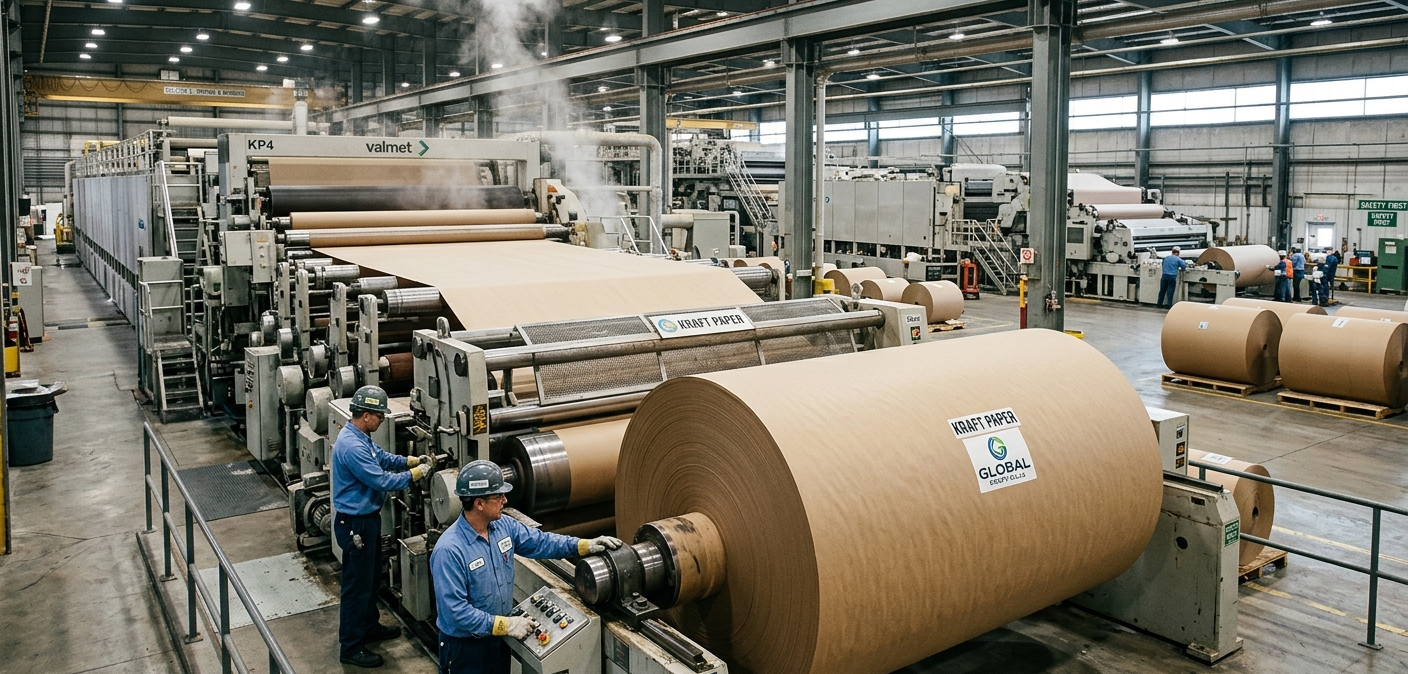
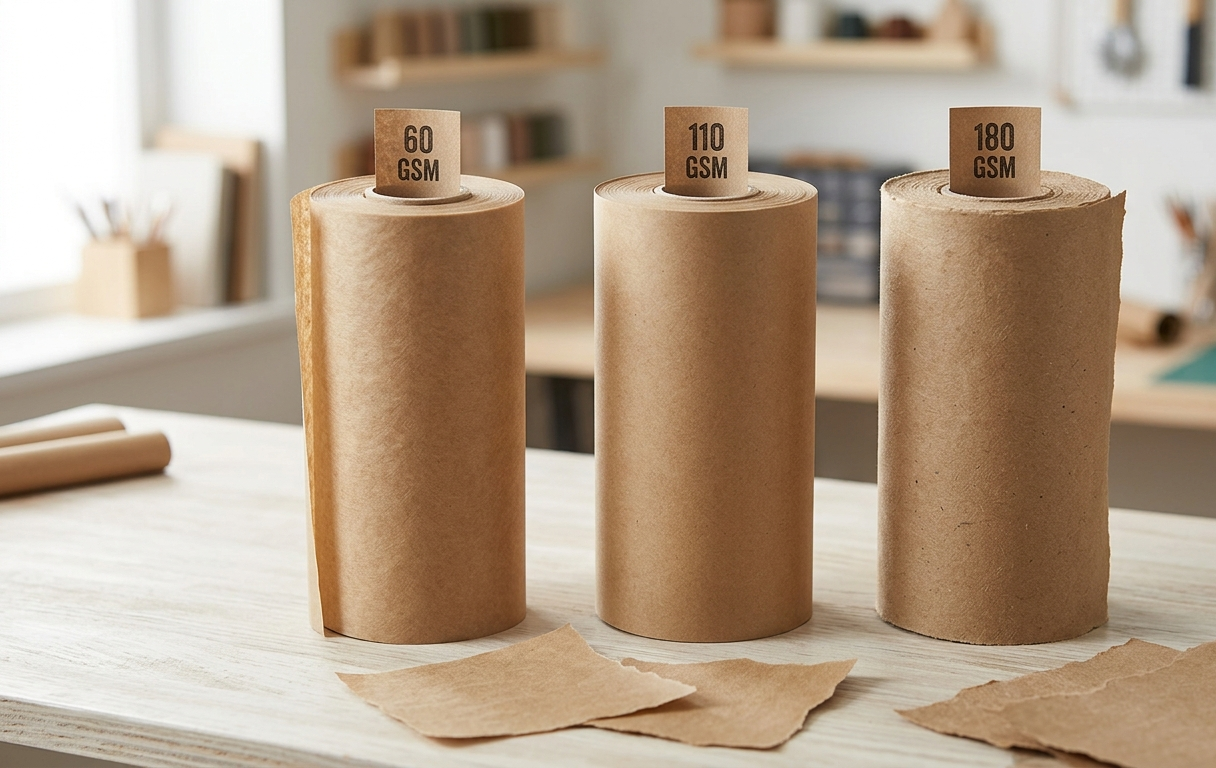
The top 15 kraft paper manufacturers in Mexico span integrated mills, converters, and importers. Leaders include Bio Pappel (the largest), Copamex, Smurfit Westrock Mexico, Industrias Citra, and several regional specialists. Mexican mills produce kraft from 50 to 280 g/m², primarily from recycled fibre for the corrugating and packaging market. FSC chain-of-custody is increasingly standard for retail-bound packaging. Lead times run 5–15 days for stocked grades, 3–5 weeks for custom production runs.
Mexican Kraft Paper Manufacturers at a Glance
| Rank | Manufacturer | Region | GSM Range | FSC | Lead Time |
|---|---|---|---|---|---|
| 1 | Bio Pappel (Bio-Pappel Corrugados) | Durango HQ, national | 70–280 g/m² | Yes | 5–14 days stocked |
| 2 | Copamex | Monterrey, Nuevo León | 60–250 g/m² | Yes | 5–18 days |
| 3 | Smurfit Westrock Mexico | Multiple sites | 70–280 g/m² | Yes | 5–14 days stocked |
| 4 | Industrias Citra | Toluca, Edomex | 70–200 g/m² | Yes | 10–21 days |
| 5 | Empaques Modernos San Pablo | Mexico City | 70–250 g/m² | Yes | 10–18 days |
| 6 | Grupo Gondi | Apizaco, Tlaxcala | 70–250 g/m² | Yes | 10–21 days |
| 7 | Cartonajes Industriales (CART) | Querétaro | 100–250 g/m² | Yes | 14–28 days |
| 8 | Servicios Industriales Peñoles (paper division) | Various | 70–200 g/m² | Partial | 14–28 days |
| 9 | Empresas CMPC Mexico | Lerma | 70–220 g/m² | Yes | 14–28 days |
| 10 | Papelera del Norte | Nuevo León | 60–180 g/m² | Yes | 10–18 days |
| 11 | Papelera de Atenquique | Jalisco | 70–200 g/m² | Yes | 14–28 days |
| 12 | Industria Papelera Mexicana (IPM) | Mexico City metro | 70–200 g/m² | No | 10–21 days |
| 13 | Papelera Coyoacán | Mexico City | 60–180 g/m² | Yes | 14–28 days |
| 14 | Macfarlane Mexico (converter) | Multiple | 60–280 g/m² | Yes | 10–21 days |
| 15 | Kangchuang Papers (USA, ships to Mexico) | Shenzhen — sea freight | 40–300 g/m² | Yes | 4–6 weeks door-to-door |
Why the Mexican Kraft Paper Market Looks the Way It Does
The Mexican kraft paper sector is shaped by three forces. First, USMCA trade integration with the US and Canada means Mexican mills serve North American FMCG and e-commerce supply chains, particularly for nearshoring-driven manufacturing in Nuevo León, Coahuila, Querétaro, and Aguascalientes. Second, recycled-fibre availability is strong — Mexico City and the broader metropolitan area generate substantial post-consumer fibre supply that domestic mills convert to kraft testliner and corrugating medium. Third, virgin pulp is largely imported from Brazil (Suzano), Chile (CMPC, Arauco), and Canada — Mexican mills running virgin grades face higher input costs than their US counterparts.
FSC certification has become standard for retail-bound packaging following major retailer (Walmart, Costco, Soriana, Liverpool) supplier requirements. PEFC is occasionally accepted as an alternative. Pricing in Mexico runs roughly 10–18% below US domestic equivalents on standard recycled grades, reflecting lower labor cost and proximity to recycled fibre supply. On virgin grades, Mexican mills price closer to US benchmarks because of import-cost dependency.
1. Bio Pappel — The Largest Mexican Mill Group
Bio Pappel (Industrias Bio Pappel) is the largest paper company in Mexico, operating mills across Durango, Mexico State, San Luis Potosí, and other states. Founded in 2007 from the merger of Copamex’s paper division and Industrias Durango. Capacity exceeds 1.5 million tonnes annually across kraft, testliner, corrugating medium, and recycled boards. FSC and PEFC certified across most production lines.
Strengths: massive scale, strong distribution network across Mexico, integrated corrugating capability that lets Bio Pappel sell both paper and finished boxes. Weaknesses: large-mill responsiveness — small custom orders are not the focus.
2. Copamex — Monterrey-Based Specialist
Headquartered in Monterrey, Nuevo León. Copamex operates kraft paper mills focused on the broader packaging market — testliner, corrugating medium, white-top kraft for retail-display packaging. FSC certified. Strong customer base across nearshoring manufacturing in northern Mexico, with USMCA-friendly logistics for cross-border shipments to US Tier-1 customers in Texas and beyond.
3. Smurfit Westrock Mexico
Following the 2024 Smurfit Kappa / WestRock merger, Smurfit Westrock operates multiple Mexican facilities across paper production and corrugated converting. FSC certified. Strong on testliner grades for the FMCG corrugated market and white-top for retail-display packaging. Lead times benefit from in-country production for Mexican customers and short cross-border transit for US-bound work.
4. Industrias Citra
Toluca, State of Mexico. Mid-tier mill producing kraft paper, testliner, and specialty grades. FSC certified. Strong in industrial wrap and protective packaging for the Mexico City metropolitan area’s industrial customer base. Lead times 10–21 days reflect the mid-tier scale.
5–9. Mid-Tier and Specialty Mills
Empaques Modernos San Pablo handles Mexico City-area kraft paper for FMCG customers. Grupo Gondi (Apizaco, Tlaxcala) is a major recycled-paper producer with strong sustainability credentials. Cartonajes Industriales (CART, Querétaro) specializes in heavier kraft grades for the corrugated outer-liner market. Servicios Industriales Peñoles operates a paper division alongside its mining business. Empresas CMPC Mexico (Chilean-owned) brings Chilean virgin-pulp expertise to the Mexican market via the Lerma facility.
10–14. Regional Producers and Converters
Papelera del Norte (Nuevo León), Papelera de Atenquique (Jalisco), Industria Papelera Mexicana (Mexico City metro), and Papelera Coyoacán (Mexico City) cover regional kraft paper markets at smaller scale. Macfarlane Mexico operates as a converter sourcing kraft paper from multiple mills and converting to spec for retail and industrial packaging customers.
15. Kangchuang Papers — A Global Option for Mexican Buyers
For Mexican packaging buyers and converters seeking a global second-source supplier, Kangchuang Papers offers Shenzhen-based industrial kraft paper shipped to Mexican Pacific or Gulf ports in 4–6 weeks door-to-door. FSC chain-of-custody certified across the 40–300 g/m² production range. Standard widths 200 mm to 2,400 mm, available in roll or sheet format.
Where Kangchuang wins for Mexican buyers:
- Pricing competitive with Mexican virgin grades and 5–15% above Mexican recycled grades — but with consistent quality across long production runs that some Mexican mills don’t match.
- FSC certification and TAPPI test data on every shipment — basis weight, Mullen burst, Elmendorf tear, ring crush, brightness.
- MOQ flexibility from 5 tonnes (LCL) through 20+ tonnes (FCL).
- Sea freight to Manzanillo, Lázaro Cárdenas, Veracruz, or Altamira ports with arranged inland trucking to customer facilities.
Where Kangchuang isn’t the right fit: when 5–10 day stocked-grade delivery from a Mexican mill is needed, or for buyers below the 5-tonne LCL minimum.
How to Pick the Right Mexican Kraft Paper Supplier
Apply this in order:
- Massive volume (>500 tonnes/year) FMCG corrugating? Bio Pappel or Smurfit Westrock Mexico.
- Cross-border (USMCA) shipments to US Tier-1 customers? Copamex (Monterrey) or Smurfit Westrock for proximity to Laredo border crossings.
- Premium retail packaging requiring white-top kraft? Smurfit Westrock or Bio Pappel.
- E-commerce kraft mailer paper at mid volume? Industrias Citra, Grupo Gondi, or Kangchuang (cross-Pacific).
- Recycled-content sustainability story? Grupo Gondi or DS Smith-equivalent recycled-focus mills.
- Cost-pressured volume that doesn’t need Mexican-origin? Kangchuang Papers (door-to-door 4–6 weeks).
Cost and Lead Time Reality
For a representative kraft paper order — 80 g/m² FSC mixed kraft, recycled fibre, 1,000 mm wide rolls, 25-tonne annual volume:
- Bio Pappel: $760–$880 per tonne FOB mill, 5–14 day lead time stocked.
- Copamex (Monterrey): $740–$860 per tonne FOB mill, 5–18 day lead time.
- Smurfit Westrock Mexico: $780–$920 per tonne FOB mill, 5–14 day lead time.
- Mid-tier Mexican mill: $720–$840 per tonne FOB mill, 10–21 day lead time.
- Kangchuang Papers (Shenzhen): $880–$980 per tonne FOB Shenzhen, 4–6 week lead time door-to-door including sea freight to Manzanillo or Veracruz.
Mexican import duties on Chinese paper run roughly 5–8% under prevailing tariff schedules; VAT (IVA) is 16% on imported goods. Combined import cost adds approximately 25–30% to FOB Shenzhen pricing, bringing Kangchuang’s landed pricing to roughly $1,100–$1,250 per tonne in Mexico City. For Mexican buyers, this puts Kangchuang at premium pricing versus domestic mills — making sense only when consistency, FSC certification, or specific GSM grades are unavailable from Mexican suppliers.
Frequently Asked Questions
How does USMCA affect Mexican kraft paper trade?
USMCA (the successor to NAFTA, in effect since 2020) preserves duty-free trade in kraft paper between Mexico, the US, and Canada when origin requirements are met. Mexican kraft paper exported to US converters benefits from zero tariff treatment under USMCA Chapter 6 (textiles and goods) provided the rules-of-origin documentation is filed correctly. This effectively makes Mexican mills US-domestic substitutes for many cross-border supply chains.
Why are some Mexican mills FSC-certified and others not?
FSC certification requires chain-of-custody verification through the supply chain — from forest or recycled-fibre source through to mill output. Mills serving retail-bound packaging (Walmart, Costco, Soriana) need FSC because retailers require it; mills serving industrial-only customers can operate without it. The trend is toward universal FSC adoption as retail demands flow back to mid-volume mills.
How does Mexican kraft paper quality compare to US?
Comparable on standard recycled grades. Mexican mills run on the same TAPPI test standards (basis weight T 410, Mullen T 403, ring crush T 822) and meet equivalent specifications. On premium virgin grades, US mills with domestic softwood pulp supply chains have a slight cost advantage because Mexican mills depend on imported virgin pulp.
Can Mexican mills handle FCL export orders to other countries?
Yes. Bio Pappel, Copamex, and Smurfit Westrock Mexico routinely export to the US, Canada, Caribbean countries, and Latin American markets. Bio Pappel and Copamex have established export programs with FCL container shipping from Manzanillo (Pacific) or Veracruz (Gulf) ports.
Does Kangchuang ship to Mexican converters?
Yes. Kangchuang ships FCL or LCL by sea freight to Manzanillo, Lázaro Cárdenas, Veracruz, or Altamira ports with arranged customs clearance and inland trucking to converter facilities. Standard lead time is 28–35 days port-to-door. Customs clearance, IVA pre-payment, and delivery are typically included in DAP (Delivered At Place) Incoterms pricing.
What testing data does Kangchuang provide on each lot?
Standard test certificate per shipment covering: basis weight (TAPPI T 410), caliper (TAPPI T 411), Mullen burst (TAPPI T 403), Elmendorf tear (TAPPI T 414), tensile strength MD/CD (TAPPI T 494), ring crush (TAPPI T 822), ISO brightness (ISO 2470), and moisture content. Custom test programs available on request for printable grades or specialty applications.
Conclusion
The Mexican kraft paper market in 2026 is mature and well-served, with strong domestic mills covering FMCG corrugating, cross-border USMCA supply chains, and retail packaging. Bio Pappel, Copamex, and Smurfit Westrock Mexico dominate volume; mid-tier mills and converters fill regional and specialty niches. Global suppliers like Kangchuang Papers offer second-source supply for Mexican buyers seeking specific grades or consistency standards that aren’t available domestically, particularly on premium virgin or specialty calendered grades. Need a global second-source kraft paper supplier shipping to Mexico in 4–6 weeks? Contact Kangchuang Papers for a sample pack covering 40–300 GSM industrial kraft grades with FSC certification and TAPPI test data on every grade.