Skip to content
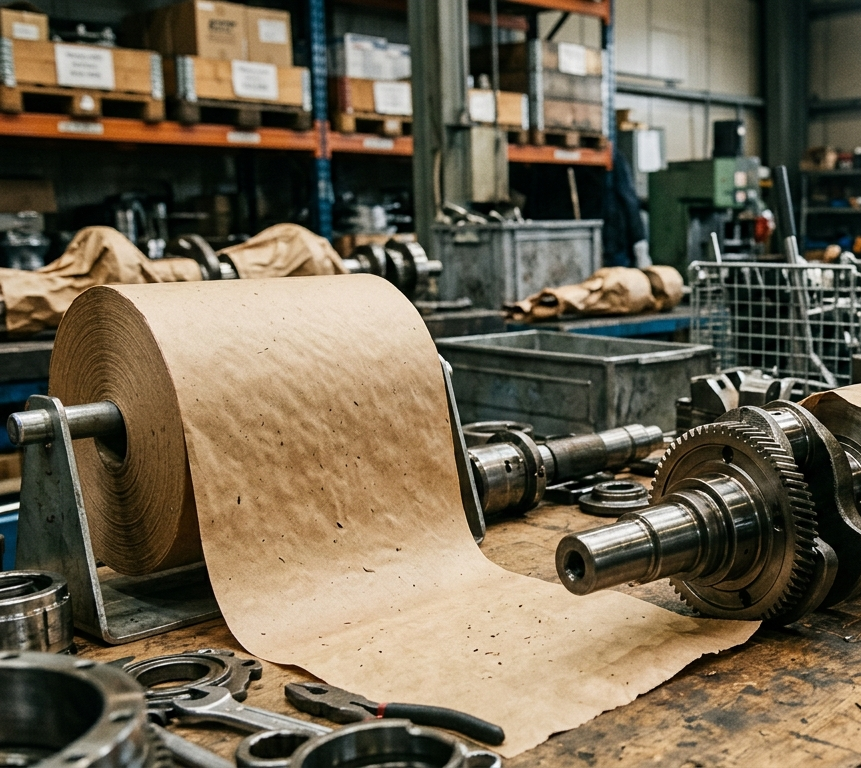
A single rusted bearing can fail an entire shipment of machined parts. By the time the corrosion shows up at the receiving dock, the cost is not just the part — it is the rework, the rejected lot, the delayed line, and the customer who now wonders what else slipped through. VCI paper exists to stop that chain of events before it starts, and choosing the right grade is the difference between metal that arrives clean and metal that arrives scrapped.
We have manufactured rust-proof paper for industrial buyers for nearly two decades, supplying electronics, hardware electroplating, and metal-parts customers who cannot afford a corrosion claim. This guide explains what VCI paper actually is, how the chemistry protects your parts, and the exact specs to check before you place an order.
What VCI Paper Is
VCI paper is kraft paper treated with Volatile Corrosion Inhibitor chemistry. The inhibitor compounds are embedded in or coated onto the paper, and they slowly vaporize off the surface once the paper is wrapped around or placed near metal. Those molecules settle on every exposed surface inside the package and form a microscopically thin protective layer that blocks the moisture, oxygen, and ions that drive rust.
VCI stands for volatile corrosion inhibitor. You will also see it sold as vapor corrosion inhibitor paper, anti-rust paper, rust inhibitor paper, or VCI kraft paper. The names change with the supplier. The mechanism does not.
The key advantage over older methods is what happens when you unwrap the part. Oil and grease-based rust preventives leave a film that has to be degreased before assembly. VCI paper leaves the surface clean and dry, ready to use, with no solvent step and no cleanup labor.
How the Protection Works
VCI paper protects through two actions at once, which is why it outperforms a plain barrier wrap.
- Vapor-phase protection. Inhibitor molecules volatilize into the enclosed air space and travel to surfaces the paper never physically touches. That matters for parts with threads, bores, recesses, and internal cavities — the exact geometry a sprayed coating cannot reach evenly. Open the package and some molecules escape, but the paper keeps releasing more to restore the protective concentration.
- Contact-phase protection. Where the paper sits directly against the metal, a contact layer reinforces the barrier on that surface.
For this to work, the package needs to be reasonably enclosed. VCI is designed for void spaces such as boxes, sealed wraps, and equipment internals. Leave the wrap loose and open to moving air, and the inhibitor concentration never builds. Wrap snugly, close the box, and the chemistry does its job.
Ferrous vs. Non-Ferrous: Match the Chemistry to the Metal
Not all VCI chemistry protects all metals. This is the single most common sourcing mistake we see.
| Metal Type | Examples | What to Specify |
| Ferrous | Carbon steel, cast iron, machined steel parts | Standard ferrous VCI grade |
| Non-ferrous | Aluminum, copper, brass, zinc, solder | Multi-metal VCI formulated for non-ferrous |
| Mixed assemblies | Steel housings with copper or aluminum components | Multi-metal VCI verified for every metal present |
If your assembly contains more than one metal, ask for a multi-metal grade and confirm it is validated for each metal in the part. A ferrous-only inhibitor can leave aluminum or copper unprotected, or in some cases react with it.
VCI Paper vs. the Alternatives
Buyers usually weigh VCI paper against VCI poly film and oil-based rust preventives. Each has a place.
| Factor | VCI Paper / Kraft | VCI Poly Film | Oil-Based RP |
| Reaches recesses and cavities | Excellent (vapor phase) | Good | Poor without full coating |
| Moisture barrier | Moderate (better when poly-coated) | Excellent | Excellent |
| Residue on the part | None | None | Leaves film, needs degreasing |
| Best for | Clean handling, fast wrap, irregular parts | High-humidity, long-term sealed storage | Heavy-duty, long-haul, harsh conditions |
| Printability and converting | High | Lower | N/A |
For many electronics and hardware programs, paper wins because parts come out clean and ready for the next process. For long ocean transit in high humidity, a poly-coated VCI kraft or a VCI poly liner adds the moisture barrier you need. The right choice depends on your storage time and environment, not on which product a supplier happens to stock.
The Specs to Confirm Before You Order
Use this as your checklist when you request a quote. Vague orders lead to wrong grades.
1. Metal type. Ferrous, non-ferrous, or mixed. This sets the inhibitor chemistry.
2. Basis weight (GSM). Common VCI kraft runs roughly 50 to 90 GSM for wraps and interleaving, heavier for sheets and chips. Lighter paper conforms to small parts; heavier paper survives rough handling.
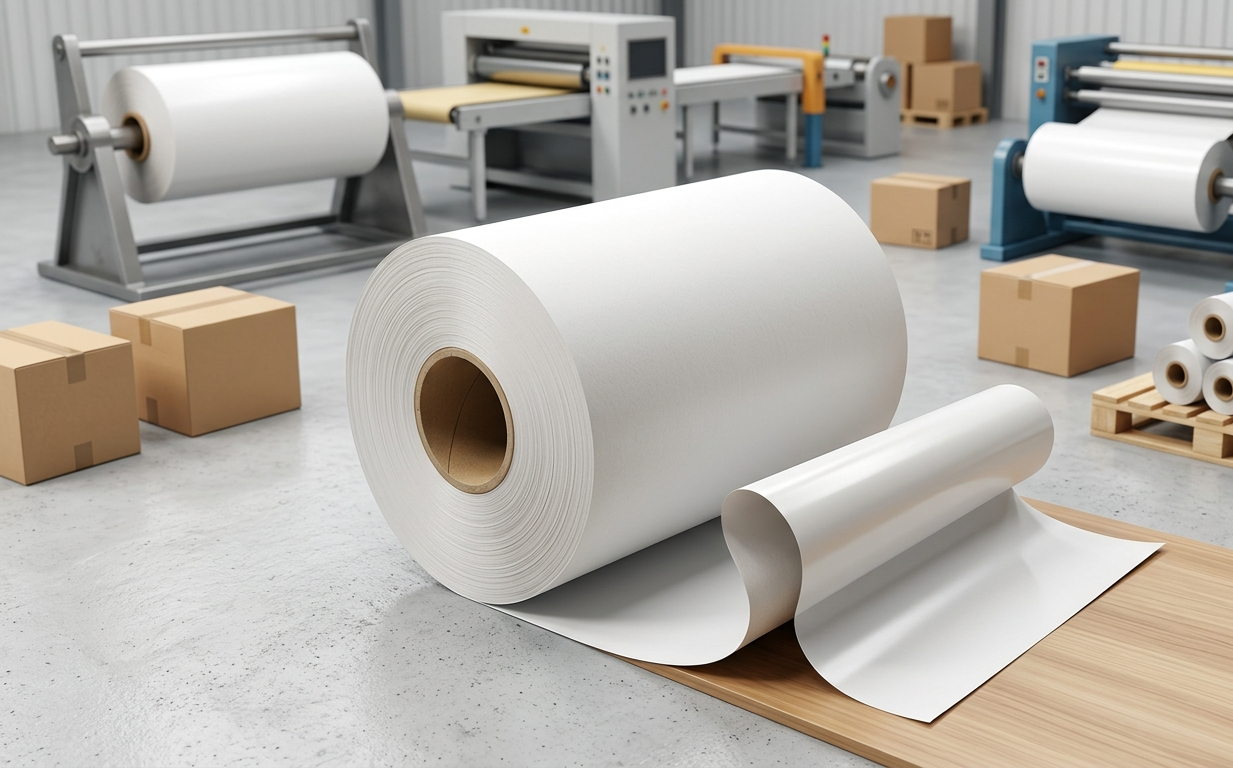
3. Format. Rolls for automated lines, sheets for hand-wrap, or precut chips for tight cavities.
4. Single or poly-coated. Add a polyethylene coat when you need a stronger moisture and tear barrier.
5. Protection duration. Quality VCI papers protect up to about 12 months in sealed conditions. Confirm the figure for your storage window.
6. Compliance. If you sell into regulated supply chains, ask about nitrite-free formulation and standards such as TRGS 615, REACH SVHC, and RoHS. Automotive and defense programs may also reference test standards like MIL-PRF-3420.
Where VCI Paper Fits in Real Production
In the industries we supply, VCI paper does most of its work between process steps, not just in final shipping. Metal parts sit idle between machining, plating, and assembly, and that idle time is when humidity and airborne salts start the corrosion clock. A VCI interleaf or wrap holds the part rust-free until it moves to the next station. For electroplating and hardware customers, that often means fewer rejects at incoming inspection and a cleaner audit trail on quality.
Pair VCI paper with the right partition or interleaving sheet and you protect both the surface and the edges of stacked parts in one packing operation.
Frequently Asked Questions
Is VCI paper safe for direct contact with finished metal surfaces?
Yes. Properly formulated VCI paper is designed to leave no oily residue and to dissipate cleanly once the part is unwrapped. For sensitive finishes, request an acid-free, pH-neutral grade.
How long does VCI protection last?
In a reasonably sealed package, good VCI paper protects metal for up to roughly 12 months. Protection drops if the package stays open to moving air or if the wrap is loose.
Does VCI paper work on aluminum and copper?
Only if you specify a multi-metal grade validated for those metals. Standard ferrous VCI is formulated for steel and iron.
Can VCI paper be printed or custom-sized?
Yes. VCI kraft can be supplied in custom rolls, sheets, and chips, and many grades accept printing for branding or part identification.
What GSM should I choose?
Lighter grades around 50 to 70 GSM conform well to small or irregular parts. Heavier grades hold up to abrasion and rough handling. Match weight to part size and how rough the handling will be.