Skip to content
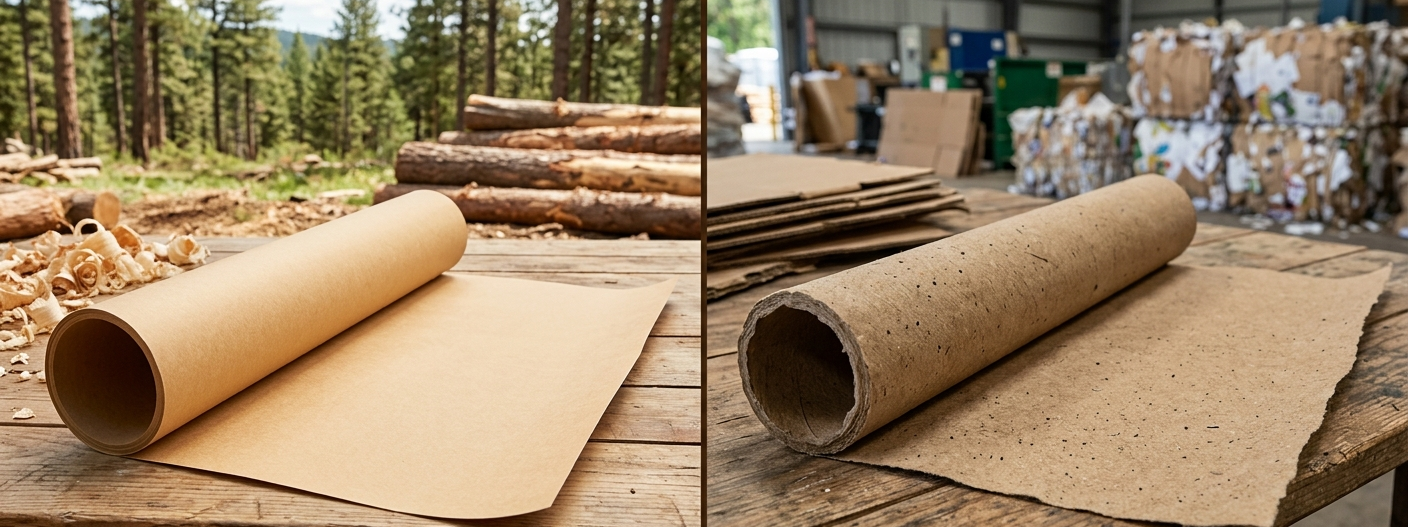
Virgin kraft paper is made from fresh softwood pulp with long fibres (2.5–3.5 mm) producing higher strength — typically 25–35% better Mullen burst, tensile, and tear strength at equivalent GSM. Recycled kraft uses post-consumer or post-industrial recovered fibre with shorter fibres (1.0–1.8 mm), producing 20–30% lower cost and a stronger sustainability story. Choose virgin when strength is the binding constraint (heavy outer liner, structural bags, high-tensile applications) and recycled when cost or sustainability dominates (corrugating medium, e-commerce mailers, industrial wrap).
Virgin vs Recycled Kraft at a Glance
| Property | Virgin Kraft | Recycled Kraft | Difference |
|---|---|---|---|
| Fibre length | 2.5–3.5 mm (softwood) | 1.0–1.8 mm (recovered) | Virgin 2x longer |
| Mullen burst (200 GSM) | 130–155 psi | 95–120 psi | Virgin 30% stronger |
| Tensile MD (200 GSM) | 5,500–7,000 N/m | 3,800–5,200 N/m | Virgin 35% stronger |
| Tear (Elmendorf) | 4,500–6,000 mN | 2,800–4,200 mN | Virgin 50% stronger |
| Cost (per tonne) | $880–$1,180 | $680–$880 | Virgin 25–30% more |
| Carbon footprint | Higher per kg paper | Lower per kg paper | Recycled wins |
| FSC chain-of-custody | Yes (FSC 100% or Mix) | Yes (FSC Recycled or Mix) | Both available |
| Brightness | ISO 28–32% natural | ISO 22–28% natural | Virgin slightly brighter |
How Virgin Kraft Is Made
Virgin kraft starts with softwood logs — typically pine, spruce, or fir — debarked, chipped, and cooked in a kraft pulping process. The cooking liquor (sodium hydroxide and sodium sulphide) breaks down the lignin that binds wood fibres together, leaving long cellulose fibres relatively intact. The Kraft process gets its name from the German word for ‘strength’ because it produces the strongest paper-making fibres available.
After cooking, the pulp is washed, screened, and either bleached (for white kraft) or left in its natural brown state (unbleached kraft, the dominant industrial product). Fibres at this stage average 2.5–3.5 mm in length with virtually no degradation from previous use. The pulp is then dewatered, formed into the paper sheet, pressed, and dried.
The strength advantage comes from fibre length and integrity. Long fibres interlock more thoroughly, creating more bonding sites per unit area. Each fibre is also stronger because cooking didn’t damage the cellulose chains as severely as repeated recycling would. The result: higher burst strength, higher tensile, and dramatically higher tear resistance.
How Recycled Kraft Is Made
Recycled kraft starts with recovered paper — old corrugated containers (OCC), mixed waste paper, kraft cuttings from converters, or specific high-grade recovered streams. The recovered paper is repulped in water, screened to remove contaminants (staples, plastic film, adhesive), and de-inked if necessary. The resulting pulp is then formed into new paper using the same equipment as virgin kraft.
The fibre cost: each recycling cycle shortens fibres. Cellulose fibres break during repulping, beating, and forming. After 4–7 recycling cycles, fibres become too short to make paper effectively (typically below 0.8 mm). Practical recycled kraft typically averages 1.0–1.8 mm fibre length depending on the source mix.
Modern recycled kraft mills add small percentages of virgin fibre (typically 5–25%) to maintain strength on premium grades. This is why much of the global kraft supply is FSC Mix-labeled rather than pure FSC Recycled. The mixed-fibre approach gets sustainability credit for the recycled content while preserving enough strength for demanding applications.
Strength Differences in Detail
Three industry-standard tests show the strength gap between virgin and recycled kraft:
Mullen Burst (TAPPI T 403)
The pressure required to burst a clamped sample. At 200 GSM, virgin kraft typically tests 130–155 psi (897–1,069 kPa). Recycled kraft tests 95–120 psi (655–827 kPa). The 30% gap reflects fibre length and bonding density — long fibres distribute load across a larger network.
Tensile Strength (TAPPI T 494)
Force per unit width to tear the paper in tension. At 200 GSM machine direction (MD), virgin tests 5,500–7,000 N/m versus recycled 3,800–5,200 N/m — a 35% difference. The cross-direction (CD) values are typically 50–60% of MD because fibres orient along the production direction.
Tear Strength (TAPPI T 414, Elmendorf)
Force to propagate a tear once started. At 200 GSM, virgin kraft tests 4,500–6,000 mN. Recycled tests 2,800–4,200 mN — about 50% lower. This is the largest gap among standard strength tests because tear propagation depends heavily on fibre length: longer fibres bridge growing tears more effectively.
When Virgin Kraft Wins
Choose virgin kraft when:
- Heavy outer liner (200–300 GSM) on corrugated boxes shipping high-load products. The outer face needs maximum burst and tear resistance.
- Heavy industrial bags carrying 25 kg or more — pet food, building materials, industrial chemicals. Bag failure is expensive and dangerous.
- High-tensile applications like sack kraft for cement bags, where the material handling forces drive design.
- Premium retail bags where the printable face needs higher brightness and the bag carries higher-value contents.
- Food-contact wrap with FDA 21 CFR 176.170 compliance, where virgin fibre simplifies the regulatory picture.
- First-generation paper applications where the paper will itself be recycled into demanding downstream uses.
When Recycled Kraft Wins
Choose recycled kraft when:
- Corrugating medium (the fluted layer in corrugated board) — the medium doesn’t see direct burst load, and recycled is universally used here.
- Inner liner of corrugated board where the outer liner takes the abuse and the inner needs only moderate strength.
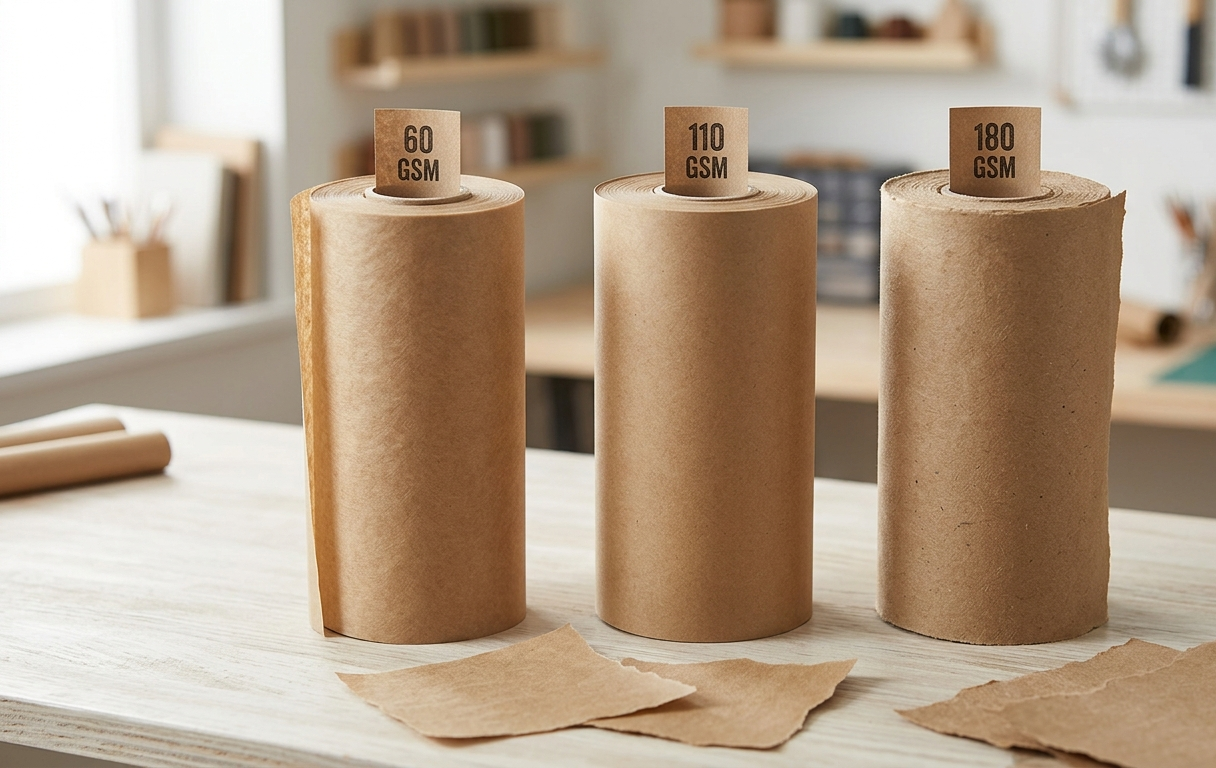
- E-commerce mailers and void-fill paper at moderate GSM (60–110), where strength margins are comfortable.
- Industrial wrap and slip sheets where the paper is essentially a separator with low strength demand.
- Sustainability-driven brand programs (consumer-facing DTC, retailers with public sustainability commitments) where the recycled-content story matters more than the cost saving.
- Cost-pressured commodity packaging where every dollar matters and the application can tolerate the strength penalty.
Mixed Approach: FSC Mix Kraft
The dominant global industrial kraft category is FSC Mix — a blend of virgin and recycled fibre under FSC chain-of-custody certification. Typical compositions:
- FSC Mix kraft for outer liner: 60–80% virgin, 20–40% recycled. Strength sufficient for most outer applications, sustainability story acceptable to most retailers.
- FSC Mix kraft for general packaging: 30–60% virgin, 40–70% recycled. Workhorse grade for retail bags, e-commerce mailers, light industrial wrap.
- FSC Mix testliner: 10–30% virgin, 70–90% recycled. Strong enough for inner liner duty at corrugated-grade pricing.
The FSC Mix label allows brands to claim FSC-certified packaging without committing to 100% virgin or 100% recycled, which lets the supply chain optimize fibre mix for cost and performance simultaneously. Most major kraft mills operate primarily on Mix grades because the demand pattern fits this balance.
Cost Reality
Indicative pricing in mid-2025 (FOB mill, 5+ tonne lots):
- 100% virgin kraft (FSC 100% or FSC Mix high-virgin): $980–$1,180 per tonne.
- 100% recycled kraft (FSC Recycled): $680–$820 per tonne.
- FSC Mix kraft (50/50 blend typical): $780–$920 per tonne.
- Premium recycled (de-inked, brightness-controlled): $780–$920 per tonne.
Per square metre cost works out as GSM × cost-per-tonne ÷ 1,000,000. For 100 GSM kraft, virgin lands at $0.098–$0.118/m² versus recycled at $0.068–$0.082/m². For a typical e-commerce mailer with 0.15 m² of paper, the material cost difference is $0.005–$0.007 per mailer — modest enough that the strength or sustainability story usually wins the decision over pure material cost.
Sustainability Comparison
Recycled kraft has a substantially lower carbon footprint per kg of paper produced — typically 30–45% lower lifecycle greenhouse gas emissions because the major energy input (cooking the fibre) doesn’t repeat. The water and chemical impacts are also lower.
That said, virgin kraft from sustainably-managed forests (FSC certified) provides forest-management benefits that recycled doesn’t — incentive to manage forests, sequestered carbon in long-rotation softwood stands, biodiversity preservation through certified forestry. The ‘recycled is always better’ framing oversimplifies; both have roles in a sustainable kraft supply chain.
Most major retailers and brand owners now request a specific recycled content percentage rather than choosing pure virgin or pure recycled — typically 30–70% recycled content with FSC chain-of-custody certification on the virgin portion.
Frequently Asked Questions
Can recycled kraft match virgin strength at higher GSM?
Often yes for moderate strength targets. A 110 GSM recycled kraft can match the Mullen burst of 90 GSM virgin kraft. The cost trade-off depends on virgin pulp pricing — when virgin is expensive, recycled at higher GSM may still come out cheaper despite the weight. When virgin is cheaper, virgin at lower GSM wins.
How many times can paper be recycled?
Practically 5–7 cycles before fibres become too short for paper-making. Each cycle shortens fibres by approximately 15–25%. After 7 cycles, fibres average 0.6–0.9 mm — too short for structural paper. Those exhausted fibres still have value as raw material for tissue, building paper, and other low-strength applications.
Does recycled kraft work for food contact?
Generally requires a barrier or qualified recycled stream. Standard recycled kraft can carry residual mineral oil, ink residue, and trace contaminants from previous use. For direct food contact, FDA 21 CFR 176.170 compliance typically requires either virgin fibre or recycled fibre from qualified sources (post-industrial trim from food-grade applications, for example). FDA-compliant recycled food-contact paper is available but at premium pricing.
What’s the difference between PCR and post-industrial recycled?
Post-Consumer Recycled (PCR) means fibre from end-user disposal — used corrugated boxes, magazines, junk mail, office paper. Post-industrial recycled is fibre from manufacturing scrap before reaching consumers — converter trim, mill broke, printer scrap. PCR carries higher sustainability marketing value but is more contaminated and shorter-fibred. Post-industrial is cleaner but doesn’t carry the same consumer-recycling story.
Can Kangchuang produce custom virgin/recycled blends?
Yes. Kangchuang produces virgin kraft, recycled kraft, and FSC Mix grades with custom virgin/recycled ratios from 0/100 to 100/0 with specific basis weights, brightness targets, and strength specifications. Standard mill order minimum is 5 tonnes for custom blends, with 3–4 week lead time door-to-door international.
Which is better for mailer printing — virgin or recycled?
Virgin generally prints better because of higher brightness, more uniform surface, and longer fibres that don’t shed under inkjet or flexographic printing. Recycled can print acceptably with surface treatment (coating, MG side, or calendering) but requires more careful press setup. For premium printed mailers, virgin or virgin-heavy FSC Mix is the standard.
Conclusion
Virgin and recycled kraft serve different roles in a sustainable industrial kraft supply chain. Virgin wins where strength matters most — heavy outer liner, structural bags, premium printing surfaces. Recycled wins where strength margin is comfortable and cost or sustainability dominates — corrugating medium, e-commerce mailers, industrial wrap. FSC Mix grades blend the two to optimize for both cost and performance. The right choice depends on the specific application’s strength requirement, brand sustainability commitment, and price sensitivity.Need help choosing the right virgin/recycled mix for your kraft paper application? Contact Kangchuang Papers for a sample pack covering virgin, recycled, and FSC Mix grades from 40–300 GSM with TAPPI test data on every grade.