Skip to content
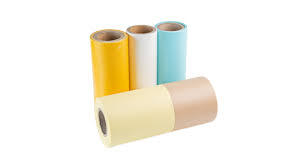
Three names. Three product categories. One persistent confusion. Release paper, silicone paper, and glassine all show up in the same conversations — labels, baking, composite layups, medical adhesives, food liners — and they get used interchangeably even though they are not the same material. Buying the wrong one means peel force out of spec, adhesives that lock up, baked goods that stick, or labels that won’t release on the application machine.
This guide explains exactly what each paper is, how they relate to each other, where they overlap, and the questions to ask before placing a roll order.
Defining the Three Categories Cleanly
Glassine: A Base Paper, Not a Release Paper
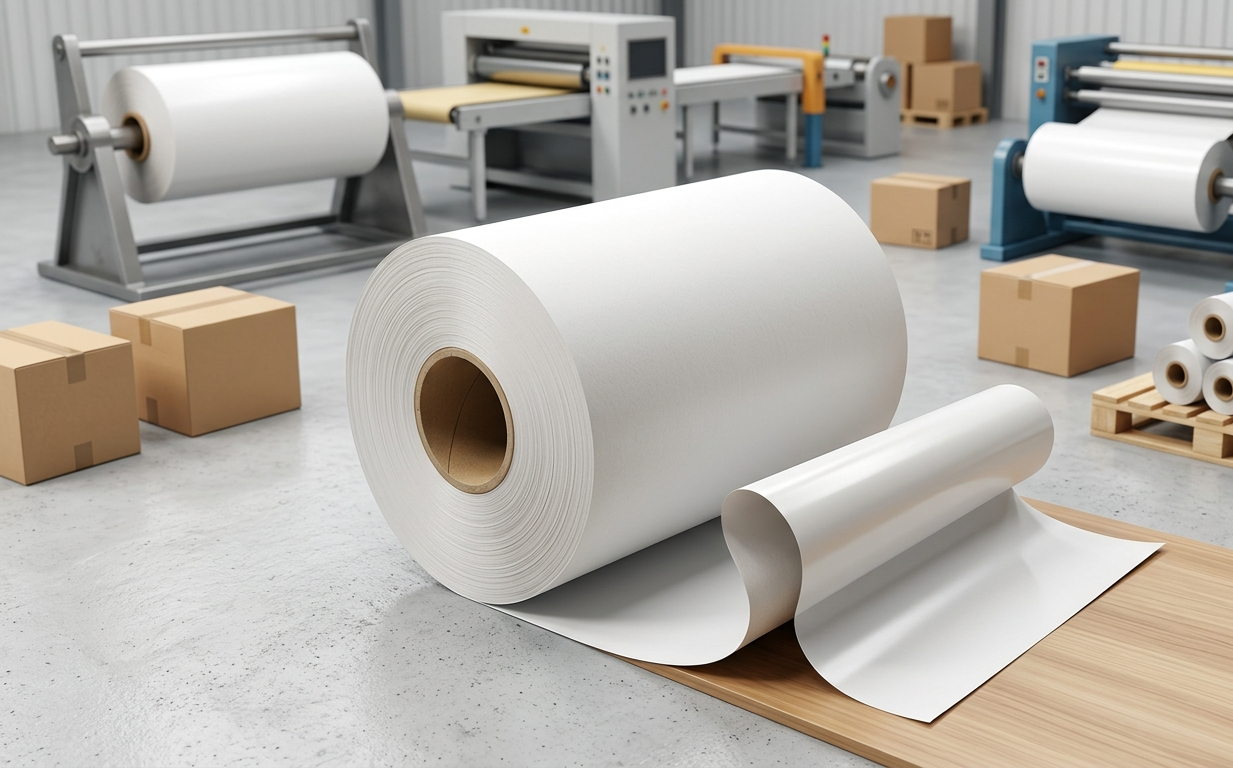
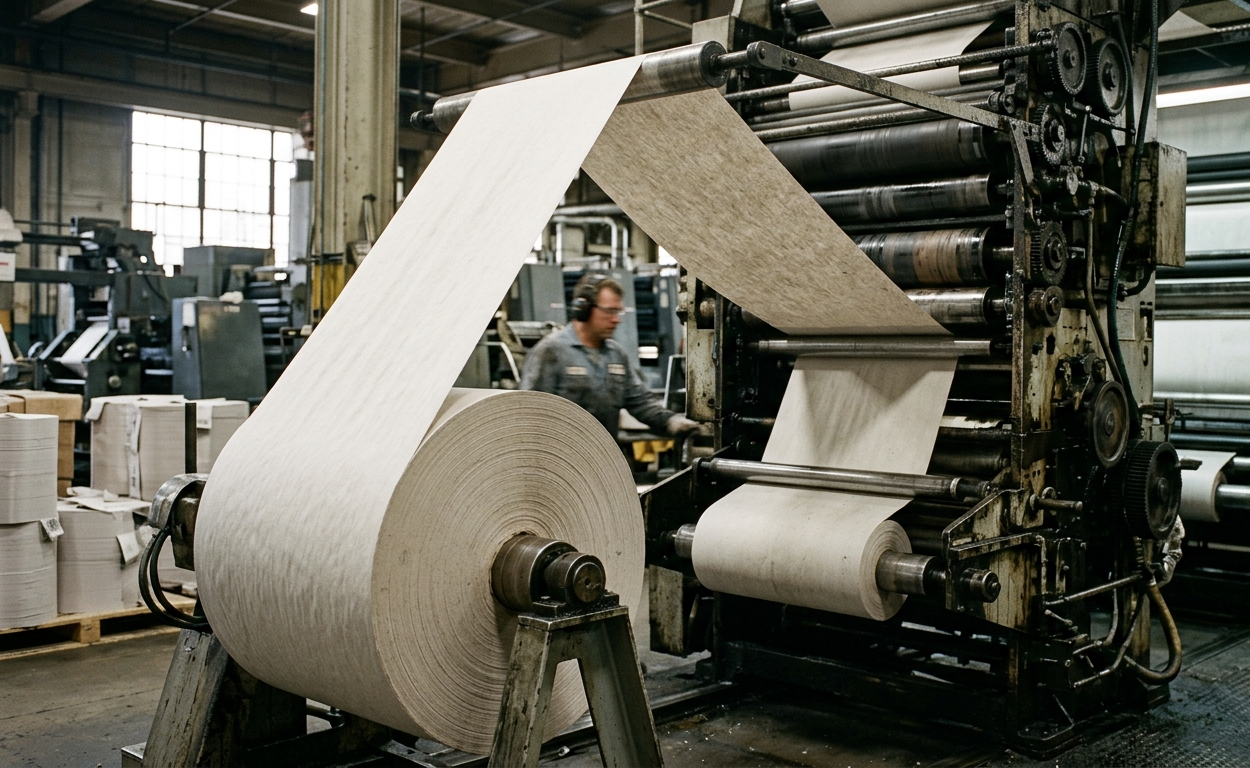
Glassine is a smooth, dense, semi-translucent paper produced by intensive supercalendering — passing the sheet between heated rollers under pressure until the fibers compress into a tight, almost glass-like surface. The result is a paper that resists grease, oil, water vapor, and air to a useful degree. Glassine itself has no release coating. Its surface is naturally low-friction because of how dense it is, but it is not non-stick in the technical sense. Adhesives will still grab onto pure glassine if pressed firmly.
Glassine is widely used as a base substrate that is then converted into release paper by adding a silicone coating. It also stands alone as an interleaving paper for stamps, photographs, archival documents, and food applications where grease resistance matters more than non-stick performance.
Silicone Paper: A Release Paper Made With Silicone Coating
Silicone paper is any base paper — glassine, kraft, or specialty paper — that has been coated on one or both sides with a cured silicone polymer. The silicone coating is what gives the paper its non-stick property. Silicone is chemically inert, heat-stable, and notoriously difficult for adhesives to bond to, which is exactly why it works as a release surface.
Silicone paper is what most people actually mean when they say release paper in everyday conversation. Bakery parchment, the backing on every pressure-sensitive label, the sheet under your sticker before you peel it — these are all silicone-coated papers.
Release Paper: The Umbrella Category
Release paper is the broadest term. It refers to any paper engineered to release cleanly from an adhesive, resin, or sticky substrate without leaving residue and without bonding. Silicone-coated paper is the dominant subtype, but release paper also includes:
- Quilon-coated paper (chromium fatty acid complex), used heavily in commercial baking
- Fluoropolymer-coated paper for high-temperature aerospace applications
- Wax-coated paper for low-tack release in butcher and packaging applications
- Polyethylene-coated paper for lower-cost industrial release
So the relationship is hierarchical: glassine is often the base. Silicone is the coating. Release paper is the resulting product category. All silicone papers are release papers; not all release papers are silicone papers.
How the Three Compare on Performance
| Attribute | Glassine (uncoated) | Silicone Paper | Other Release Papers |
| Surface coating | None — supercalendered fibers only | Silicone polymer (cured) | Quilon, fluoropolymer, wax, or PE |
| Non-stick performance | Low — grease-resistant only | High to very high | Varies by coating |
| Heat resistance | Up to ~200°C briefly | Up to ~220°C continuous | Quilon to 230°C; PE limited to ~80°C |
| Common base paper | N/A — it is the base | Glassine, kraft, MG paper | Kraft, glassine, specialty |
| Translucency | Semi-translucent | Translucent (if glassine base) | Varies by base |
| Typical applications | Archival, stamps, food liners | Labels, parchment, composites, adhesive backing | Bakery, butcher, aerospace, low-cost release |
| Reusable | Sometimes | Often (limited cycles) | Rarely |
| Cost level | Low to moderate | Moderate to high | Varies widely |
Choosing By Application
Pressure-Sensitive Labels and Stickers
This is the largest single market for silicone paper. Every label you peel off a backing sheet — shipping labels, retail price tags, product labels — is sitting on silicone-coated release paper. The silicone coating must deliver consistent peel force across the full roll, because automated label-application machines depend on predictable release. Glassine-based silicone papers dominate this segment because the dense glassine base prevents silicone migration into the paper and gives the smoothest application surface.
Bakery and Food Service
Parchment paper sold in supermarkets is typically silicone-coated. Industrial bakery liners that need to handle higher temperatures or repeated reuse often use Quilon-coated paper instead. Pure glassine works for lining cookie tins or wrapping butter, but it is not non-stick enough to bake on directly. If your specification involves dough, batter, or melted chocolate, you need a coated release paper, not unconverted glassine.
Composite and Adhesive Manufacturing
Carbon fiber prepreg, adhesive tape backings, and resin transfer molding all rely on heavy-duty silicone or fluoropolymer release paper. Here the requirements include extreme heat stability, dimensional stability under tension, and silicone coverage uniform enough that the resin releases cleanly across an entire ply. Standard label-grade silicone paper is not adequate for these applications.
Archival and Photographic Storage
Pure glassine — uncoated, acid-free, sulfur-free — is the long-standing choice for storing photographs, stamps, and historical documents. The reason is that adding any coating introduces the risk of chemical migration into the archived item over decades. Glassine alone, with its grease and air resistance plus chemical neutrality, is the safe choice. This is one of the few applications where silicone paper is actively avoided.
Industrial Interleaving
Glassine without coating is excellent as an interleaving paper between sheets of polished metal, glass, or finished surfaces. It prevents micro-scratching, absorbs minor moisture, and slips out cleanly without residue. Silicone paper can also work here, but the coating cost is unnecessary unless adhesive contact is involved.
Single-Side vs Double-Side Coated Release Paper
Silicone-coated release paper is sold in two main configurations. Single-side coated paper has silicone on one face and bare paper on the other. This is the standard for label backings, parchment sheets, and most packaging applications, because you only need release on the side that touches the adhesive or food.
Double-side coated paper has silicone on both faces. This is used when the paper sits between two sticky layers — for example, in transfer adhesive products, double-sided tape backings, or composite layups where both surfaces of the release liner are in contact with resin or adhesive.
Single-side coating is cheaper and adequate for most uses. Specifying double-side coating when you only need single is an avoidable cost. Specifying single when you actually need double is a quality failure.
The Peel Force Question
Peel force — the amount of force needed to separate the release paper from the adhesive — is the single most important spec for any release paper application. It is measured in grams per inch (g/in) or Newtons per meter (N/m), and the right value depends entirely on the application:
- Easy release (10–25 g/in): hand-applied labels, slow line-speed applications
- Medium release (25–60 g/in): standard label dispensing, most pressure-sensitive applications
- Tight release (60–150 g/in): high-speed automated dispensing, transfer adhesives
- Premium release for specialty (above 150 g/in): industrial composites, specialty tapes
Peel force is controlled by silicone coat weight, the specific silicone chemistry, and curing conditions. A reputable release paper supplier will publish a peel force range on the technical data sheet and provide test certification on request.
Quality Indicators That Separate Good Release Paper From Mediocre
- Coat weight uniformity across the full roll width (variation under 5% is excellent)
- No silicone migration to the uncoated side, which would contaminate adhesive faces
- Consistent peel force — not just initial peel, but peel after aging at elevated temperature
- Clean release — no transfer of silicone or paper fiber to the adhesive
- Dimensional stability through humidity changes (no curl, no shrinkage)
- Low extractables — important for food contact and medical applications
Frequently Asked Questions
Can I substitute glassine for silicone paper in baking?
No. Pure glassine is grease-resistant but not truly non-stick. Anything that bonds chemically — sugar caramelizing, cheese melting, dough proofing — will adhere to plain glassine. Use silicone-coated parchment for baking, not unconverted glassine.
Is silicone paper food-safe?
Most commercially produced silicone parchment paper is food-safe and FDA-compliant, but only if you buy a grade specifically certified for food contact. Industrial-grade silicone paper made for label or composite applications uses different silicone formulations that are not always food-approved. Always verify the FDA or EU 10/2011 certification on the data sheet.
Can release paper be reused?
Silicone parchment can typically handle 3–8 baking cycles depending on temperature exposure. Industrial release liners are usually single-use because the silicone coating compresses and the peel force changes after each release. Reuse beyond that risks coating failure and adhesive contamination.
What is the difference between bleached and natural release paper?
Bleached release paper uses a white base (kraft or glassine that has been bleached to remove lignin color), while natural release paper retains the brown color of the unbleached pulp. The release performance is identical; the choice is purely aesthetic and depends on whether the end product needs to look premium.
Does silicone paper expire?
Silicone-coated release paper has a shelf life of approximately 12–24 months in sealed storage at room temperature. Beyond that, the silicone coating can drift in peel force as it continues to cure or as moisture migrates through the paper. Store in a cool, dry environment and rotate stock first-in-first-out.
The Bottom Line
Glassine is a base paper. Silicone paper is glassine (or other paper) with a silicone coating that gives true non-stick release. Release paper is the umbrella category that includes silicone paper plus other release-coated alternatives. For labels, baking, and adhesive backings, silicone-coated release paper is almost always what you actually need. For archival or simple grease-resistant interleaving, pure glassine is correct and cheaper. For specialty industrial applications, the right choice depends on the temperature, the adhesive, and the peel force you require — and on always asking for the technical data sheet before buying.